
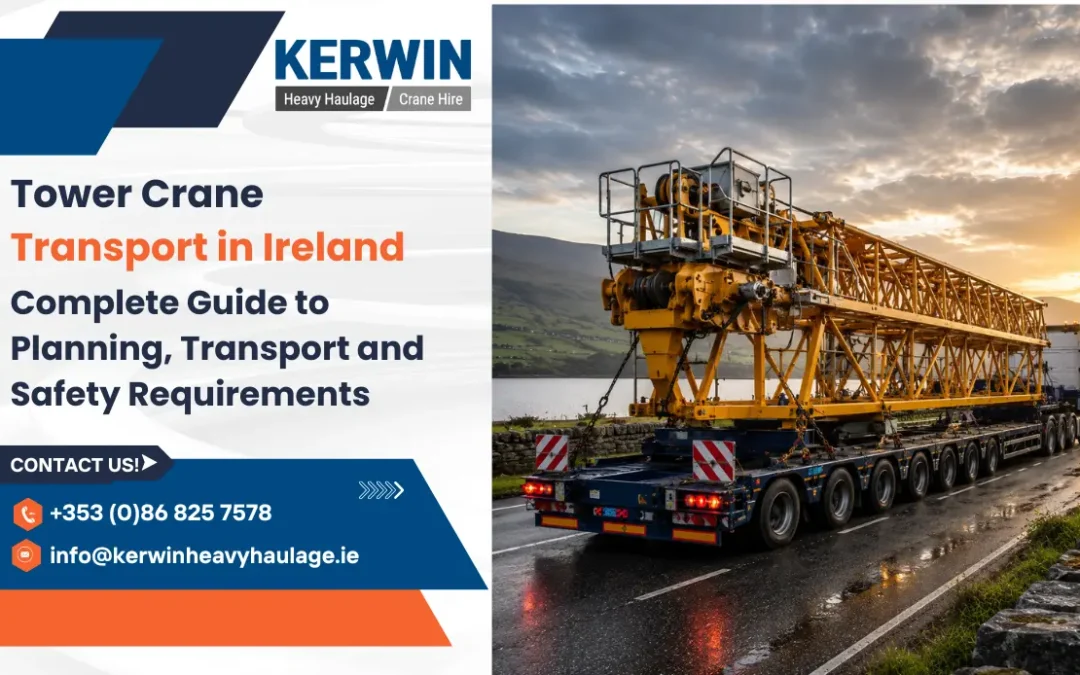
Moving a tower crane is one of the most complex transport operations within the Irish construction sector. Whether a tower crane is being delivered to a new construction project, relocated between sites, or removed following project completion, every stage requires detailed planning. This guide by Kerwin Heavy Haulage, tower crane transportation experts, explains the key planning, transport, and compliance considerations involved in tower crane haulage throughout Ireland.
What is a Tower Crane?
A tower crane is a fixed lifting crane commonly used on construction sites to lift and move heavy materials vertically and horizontally. Tower cranes are often seen on large residential developments, commercial buildings, industrial projects, and major infrastructure works.
Unlike mobile cranes, tower cranes are assembled on-site and remain in position throughout the construction programme. Their height, lifting capacity, and reach make them essential for projects where materials need to be lifted to significant elevations. Because of their size, tower cranes cannot be transported as a complete unit and must be dismantled into individual components before road transport.
Why Tower Crane Transport Requires Specialist Planning? Challenges Associated
Oversized Components
Tower crane sections, jibs, and counterweights often exceed standard vehicle dimensions. Special transport arrangements are frequently required to move these components safely on Irish roads.
Multiple Load Movements
A single tower crane may require several transport vehicles. Coordinating multiple loads while maintaining project schedules can become a significant logistical challenge.
Regulatory Compliance
Abnormal load regulations, vehicle requirements, and transport notifications must be considered before movement. Failure to comply can result in delays and enforcement action.
Route Restrictions
Bridges, roundabouts, narrow roads, and urban access points can affect transport planning. Route surveys help identify obstacles before transport begins.
Safety Risks
Loading, unloading, dismantling, transport, and reassembly all involve safety hazards that must be controlled through proper planning and risk management.
Common Tower Crane Transport Requirements
Delivering a New Tower Crane to a Construction Site
New tower cranes are transported from manufacturers, storage yards, or crane hire facilities to construction projects. Delivery schedules must align with site preparation and installation programmes.
Relocating Tower Cranes Between Projects
Many tower cranes are moved directly from one project to another. Efficient planning helps reduce downtime and maximise equipment utilisation.
Transport Following Project Completion
Once construction finishes, cranes must be dismantled and removed. Transport planning often needs to accommodate restricted site conditions and project deadlines.
Transport for Infrastructure and Civil Engineering Projects
Road, rail, energy, and public infrastructure developments frequently require tower crane transportation as projects progress through different phases.
Temporary and Long-Term Crane Relocations
Some cranes are temporarily relocated during phased developments, while others are permanently transferred to new projects across Ireland.
How to Plan a Tower Crane Transport Project
Tower crane transport planning begins long before the first vehicle arrives on site. Proper preparation reduces risks, prevents delays, and improves operational efficiency.
Early Planning Considerations
Transport planning should begin as early as possible. Project teams need to understand site requirements, transport restrictions, crane specifications, and delivery schedules before work starts.
Assessing Crane Dimensions and Weight
Every tower crane component must be measured and weighed accurately. Length, width, height, and axle loading requirements influence vehicle selection and route planning.
Site Access Evaluation
Access roads, entrance gates, turning areas, and unloading zones must be assessed. Limited access can create challenges for heavy haulage vehicles carrying crane components.
Identifying Transport Risks Before Movement
Risk assessments should identify potential hazards including restricted roads, overhead utilities, traffic conditions, weather impacts, and site-specific challenges.
Creating a Transport Schedule
Transport activities must be coordinated with dismantling, loading, delivery, unloading, and reassembly operations. Delays at any stage can impact project timelines.
Coordinating Stakeholders and Contractors
Successful tower crane transport often involves multiple parties including crane hire companies, transport operators, escort vehicle providers, site managers, contractors, and local authorities.
Tower Crane Components and Transport Requirements
Understanding individual tower crane components helps explain why transport planning is often complex.
Tower Sections
Tower sections form the vertical mast structure of the crane. These steel sections are large, heavy, and typically transported individually or in grouped loads depending on dimensions.
Jib and Counter Jib Components
The jib is the horizontal arm responsible for lifting operations. Due to their length, jib sections frequently require specialist transport planning and route assessments.
Counterweights and Ballast Blocks
Counterweights provide stability during lifting operations. These components are extremely heavy and require suitable transport equipment capable of handling concentrated loads.
Mast Sections and Frames
Mast sections and support frames vary significantly depending on crane model and lifting capacity. Transport arrangements must reflect the specific dimensions involved.
Machinery and Control Units
Motors, winches, electrical systems, and operator control equipment require protection during transport to prevent damage and maintain operational reliability.
Transporting Oversized Crane Components Safely
Oversized components must be secured using suitable restraint systems. Load security remains one of the most important safety considerations during crane transportation.
Legal Requirements for Tower Crane Transport in Ireland
Tower crane transport is governed by various transport, road safety, and construction-related requirements. Compliance responsibilities extend beyond simply loading a vehicle and driving to site.
Understanding Oversized and Abnormal Loads
Many tower crane components fall within the category of abnormal loads due to their dimensions or weight. Such loads often require additional planning and operational controls.
Transport Regulations That May Apply
Transport operations may need to comply with requirements relating to abnormal loads, road transport regulations, vehicle construction standards, and road safety legislation.
Relevant authorities and organisations may include:
- Road Safety Authority (RSA)
- An Garda Síochána
- Transport Infrastructure Ireland (TII)
- Local Authorities
- Port Authorities where applicable
The specific requirements vary depending on route, dimensions, weight, and project circumstances.
Vehicle and Load Compliance Requirements
Vehicles must be suitable for the loads being transported. This includes axle loading considerations, vehicle dimensions, load restraint systems, lighting, and visibility requirements.
Documentation Required Before Transport
Transport operators may require documentation relating to:
- Vehicle details
- Load dimensions
- Load weights
- Route information
- Risk assessments
- Method statements
- Transport schedules
Maintaining accurate records helps demonstrate compliance and supports safe operations.
Notifications and Authorisations
Certain abnormal load movements may require notifications to relevant authorities before transport takes place. Advance planning is essential to avoid project delays.
Responsibilities of Transport Operators
Transport operators are responsible for ensuring vehicles, drivers, loads, and transport arrangements comply with applicable legal and safety requirements throughout the journey.
Route Planning for Tower Crane Transport
Route planning is one of the most important stages of any tower crane haulage project. Even when suitable vehicles and permits are available, a poorly planned route can create significant operational challenges.
Why Route Surveys Are Essential
Route surveys identify restrictions and hazards before transport begins. This allows project teams to address issues before vehicles reach the road network.
A route survey may assess:
- Road widths
- Junction layouts
- Bridge clearances
- Overhead cables
- Traffic conditions
- Temporary restrictions
- Site access arrangements
The information collected supports safer and more efficient transport operations.
Assessing Road Width Restrictions
Some crane components can extend significantly beyond standard vehicle dimensions. Narrow roads, village centres, and restricted urban streets may require alternative routing solutions.
Bridge Height and Weight Limit Considerations
Bridges represent one of the most critical aspects of route planning. Both vertical clearances and weight restrictions must be considered before movement begins.
Route planners often examine:
- Bridge capacities
- Height restrictions
- Structural limitations
- Alternative crossings
Failure to assess bridge restrictions can result in costly transport delays.
Urban Versus Rural Transport Challenges
Urban environments often present challenges including congestion, restricted access, parked vehicles, and limited turning space.
Rural routes may involve:
- Narrow carriageways
- Weak road structures
- Agricultural traffic
- Limited diversion options
Each environment requires a different planning approach.
Managing Roadworks and Temporary Restrictions
Roadworks can affect access routes and transport schedules. Route planners should monitor temporary restrictions and identify alternative routes where necessary.
Construction activity, utility works, and public events can all influence transport planning decisions.
Contingency Planning for Route Changes
Unexpected events can affect transport operations even after planning has been completed.
Examples include:
- Road closures
- Traffic incidents
- Severe weather
- Infrastructure damage
- Emergency diversions
Developing contingency plans helps minimise disruption and supports project continuity.
Escort Vehicles and Traffic Management Requirements
Many tower crane transport projects involve abnormal loads that require additional traffic management measures. Depending on the dimensions of the load, route characteristics, and transport conditions, escort vehicles may form an essential part of the overall transport plan. Their purpose is not simply to accompany the transport vehicle but to improve safety for the public, drivers, transport operators, and road users.
When Escort Vehicles May Be Required
Oversized crane components can create challenges on public roads, particularly where road widths are restricted or where complex junctions must be negotiated. Escort vehicles may be required when loads exceed certain dimensions or where risk assessments identify additional safety requirements.
Factors that commonly influence escort vehicle requirements include:
- Load width
- Load length
- Route complexity
- Traffic density
- Road conditions
- Local authority requirements
The Role of Escort Drivers During Crane Transport
Escort drivers help manage the safe movement of heavy haulage vehicles transporting tower crane components. They provide advance warning to road users and assist transport teams in navigating difficult sections of road.
Their responsibilities may include:
- Monitoring traffic conditions
- Identifying route hazards
- Assisting vehicle manoeuvres
- Maintaining communication with drivers
- Supporting transport safety procedures
Managing Public Road Safety
Public safety remains one of the highest priorities during tower crane transportation. Large loads may occupy significant road space and require additional caution around pedestrians, cyclists, and other road users.
Effective safety measures include:
- Advance route planning
- Appropriate warning signage
- Vehicle lighting
- Escort vehicle support
- Traffic management arrangements
Coordinating with Authorities and Road Users
Certain transport operations may require communication with local authorities, road operators, infrastructure owners, or other relevant stakeholders. Early engagement helps reduce the risk of delays and unexpected restrictions.
Traffic Management Considerations for Large Crane Loads
Large crane components can affect traffic flow, particularly in urban environments. Transport schedules are often planned to minimise disruption and improve operational safety.
Why Tower Cranes Must Be Dismantled for Transport
Tower cranes are among the largest pieces of equipment used on construction sites. Once assembled, their dimensions make road transportation impossible. For this reason, tower cranes must be dismantled into individual sections before movement can take place. Components such as mast sections, jibs, counterweights, machinery units, and frames are separated and loaded individually. Careful dismantling not only improves transport efficiency but also reduces safety risks, protects equipment from damage, and allows compliance with Irish road transport regulations governing oversized and abnormal loads.
Safety Requirements for Tower Crane Transport
Safety remains the foundation of every successful tower crane haulage project. Transport operations involve heavy components, specialist vehicles, lifting equipment, and public roads, making proper safety management essential.
Risk Assessment and Method Statements
Detailed risk assessments help identify hazards before work begins. Method statements outline how transport activities will be carried out safely and efficiently.
These documents typically address:
- Loading procedures
- Unloading procedures
- Vehicle movements
- Route risks
- Emergency arrangements
- Site-specific hazards
Driver and Operator Responsibilities
Drivers and transport operators have a responsibility to ensure vehicles remain roadworthy, loads remain secure, and transport activities comply with applicable regulations.
Responsibilities include:
- Vehicle inspections
- Load security checks
- Route compliance
- Driver competence
- Safe driving practices
Site Safety During Loading and Unloading
Loading and unloading operations create significant risks if not properly managed. Exclusion zones, lifting plans, competent personnel, and communication procedures help reduce these risks.
Public Safety Considerations
Construction sites often operate near public roads, footpaths, and businesses. Transport planning should consider how movements may affect members of the public and surrounding communities.
Emergency Response Planning
Unexpected incidents can occur despite careful planning. Emergency procedures should address potential issues such as:
- Vehicle breakdowns
- Road closures
- Adverse weather
- Equipment failures
- Traffic incidents
Having a response plan improves resilience and minimises disruption.
Common Safety Risks and How They Are Managed
Common risks during tower crane transport include:
- Load movement
- Vehicle instability
- Restricted visibility
- Site access challenges
- Weather-related hazards
These risks are managed through planning, training, equipment inspections, route assessments, and operational controls.
Factors Affecting Tower Crane Transport Costs
Tower crane transport costs can vary significantly depending on project requirements. Understanding the factors involved helps contractors and project managers budget more accurately.
Crane Size and Configuration
Larger tower cranes generally require more transport vehicles, additional handling equipment, and increased planning. Complex crane configurations can increase overall project costs.
Transport Distance
Longer journeys naturally involve higher transport costs due to fuel consumption, driver hours, escort vehicle requirements, and operational resources.
Escort Vehicle Requirements
Where escort vehicles are required, additional personnel, vehicles, scheduling, and traffic management arrangements contribute to project costs.
Route Complexity
Routes involving narrow roads, restricted access points, difficult junctions, or urban centres often require additional planning and resources.
Dismantling and Reassembly Costs
The transport process extends beyond road movement. Dismantling, loading, unloading, and reassembly activities all contribute to overall project expenditure.
Project Timeframes and Scheduling
Urgent transport requirements may require additional resources and specialist planning. Flexible scheduling generally allows greater operational efficiency.
Common Challenges During Tower Crane Transport
Even well-planned projects can face operational challenges. Understanding these issues helps stakeholders prepare more effectively.
Permit and Compliance Delays
Administrative delays can affect project schedules. Planning and early engagement with relevant authorities help minimise potential disruptions.
Restricted Road Access
Ireland’s road network includes many areas where road width, bridge capacity, or turning space may restrict the movement of large crane components.
Adverse Weather Conditions
High winds, heavy rainfall, flooding, and poor visibility can affect transport schedules and site operations. Weather monitoring forms an important part of project planning.
Site Accessibility Issues
Some construction sites provide limited access for heavy haulage vehicles. Early surveys help identify suitable loading and unloading arrangements.
Unexpected Route Changes
Road closures, infrastructure works, and emergency incidents can require transport teams to modify routes at short notice.
Project Scheduling Conflicts
Construction programmes frequently change. Delays in dismantling, site preparation, or crane installation can impact transport schedules and resource allocation.
How Kerwin Heavy Haulage Helps You with Tower Crane Transport
Successful tower crane transport projects often require a combination of haulage, planning, escort, and logistics services. Related services commonly required include:
Specialist Heavy Haulage
Transporting oversized tower crane sections using suitable trailers and heavy transport equipment designed for heavy haulage transport or abnormal load operations.
Escort Vehicle Services
Providing experienced escort support for abnormal load movements across Ireland while helping improve operational safety.
Route Planning and Surveys
Assessing transport routes to identify restrictions, hazards, bridge limitations, and access challenges before movement begins.
Plant Machinery Haulage
Supporting the movement of associated construction equipment, lifting machinery, and site equipment required during crane installation projects by partnering with plant machinery haulage experts.
Construction Logistics Coordination
Helping coordinate transport schedules, site access arrangements, contractors, and project stakeholders to support efficient project delivery.
Book Tower Crane Haulage with Kerwin Heavy Haulage Today
Tower crane transport requires careful planning, specialist equipment, experienced operators, and a clear understanding of Irish transport requirements. Whether you are relocating tower cranes, coordinating crane hire logistics, or managing a major construction project, Kerwin Heavy Haulage can assist with professional plant machinery haulage, heavy haulage transport, and escort vehicle services throughout Ireland. Contact the team today to discuss your project.
Conclusion
Tower crane transport is far more than moving equipment from one location to another. Every project involves detailed planning, route assessments, compliance considerations, safety procedures, and coordination between multiple stakeholders. By understanding the transport requirements involved, construction companies, crane hire providers, developers, and contractors can reduce risk, improve efficiency, and ensure tower cranes reach their destination safely and in compliance with Irish transport regulations.
Frequently Asked Questions
Can tower crane transport take place during weekends in Ireland?
In some cases, yes, but transport schedules depend on route restrictions, authority requirements, traffic conditions, and project-specific approvals.
How many vehicles are typically needed to transport a tower crane?
The number varies by crane size, but larger tower cranes may require multiple trailers to transport all components safely.
Can tower crane components be stored before reaching the final site?
Yes. Components can be temporarily stored at secure indoor and outdoor secure storage facilities when project schedules or site readiness create delays.
Does tower crane transport require weather monitoring?
Yes. High winds, heavy rain, flooding, and poor visibility can affect loading, transport operations, and crane installation activities.
What industries commonly require tower crane transport services?
Construction, commercial developments, residential projects, infrastructure works, energy projects, industrial facilities, and major civil engineering schemes.