Safe abnormal load transport in Ireland relies on assessing the cargo, checking the route, arranging the required permissions, choosing suitable equipment, securing the load and coordinating delivery. Planning must cover collection and unloading as carefully as the road journey.
An abnormal load exceeds the applicable weight or size limits for the vehicle combination. This article covers the Republic of Ireland; Northern Ireland movements need separate checks.
Start With Accurate Load Information
The first step is to establish the load’s dimensions, weight and handling needs. Measurements must also account for the vehicle and trailer once loaded, including overall travel height.
The haulier needs to understand the centre of gravity, meaning where the load’s weight is concentrated, and identify suitable lifting and securing points. Machinery details should include whether it can be driven onto a trailer or needs lifting.
Collection and delivery access matter too. Gates, slopes, overhead obstacles and working space can change the equipment needed.
Check the Route Against the Loaded Vehicle
Abnormal load route planning checks whether the complete vehicle and load can travel safely along the proposed roads. The shortest route may include a weak bridge, restricted clearance or a bend the trailer cannot negotiate.
Checks should cover:
- Bridge capacity and weight restrictions.
- Overhead bridges, wires and other clearance limits.
- Narrow roads, bends, junctions and turning space.
- Roadworks, temporary restrictions and site entrances.
Where needed, an on-site route survey checks difficult sections in advance. Kerwin explains the connection between escort vehicles and route surveys, helping businesses understand why a map alone may not be enough.
Confirm Permits and Movement Conditions
The required permissions depend on the vehicle and load combination, dimensions, weight and route. The RSA’s abnormal-load guidance explains that permission may be needed from An Garda Síochána, local authorities or both.
The Garda permit scheme covers qualifying movements on designated routes. It does not automatically authorise every local-road section, excess weight or excess height. Relevant council requirements must also be checked.
Notifications and travel conditions should be confirmed before departure. For example, Laois County Council’s permit guidance includes notification and motorway-clearance requirements in specified circumstances. These should not be treated as a nationwide process.
Match the Tractor Unit and Trailer to the Job
Specialist heavy haulage trailers are selected around the cargo’s weight, dimensions, ground clearance and loading method. The tractor unit, which pulls the trailer, must also suit the planned combination.
Kerwin lists low loaders, flat trailers and extendable trailers among its transport equipment. A lower deck may help manage overall height, while an extendable trailer may suit a long item. The appropriate choice still depends on the actual load and route.
Discuss these needs through Kerwin’s heavy haulage services rather than choosing a trailer from cargo weight alone.
Load and Secure the Cargo Properly
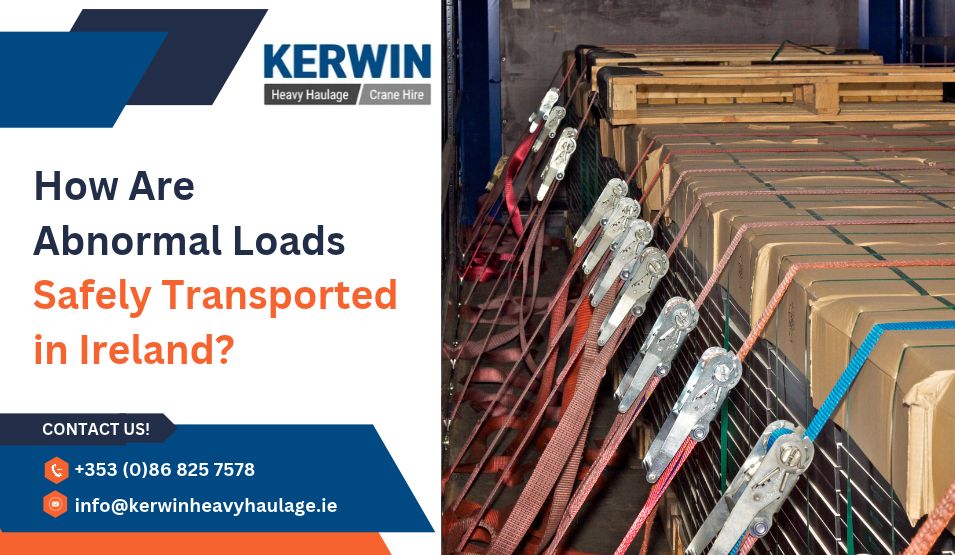
Heavy haulage load securing involves more than attaching restraints. The load must be positioned to maintain stability and distribute weight appropriately across the vehicle and axles.
Suitable restraints and attachment points must be strong enough, compatible with the cargo and in good condition. The securing arrangement must account for braking, cornering and other expected travel forces.
The HSA’s load-securing guidance covers suitable vehicles, load positioning, restraint equipment and journey checks. The method should be planned by competent people for the particular load.
Coordinate Escorts and Traffic Arrangements
Abnormal load escort vehicles can support communication, warn of hazards ahead and help the transport team approach difficult sections.
Private escorts are different from Garda escorts. Garda involvement is not required for every movement and must be confirmed where necessary. Private escort vehicles do not independently gain authority to close roads or direct traffic.
Any required traffic restrictions or control measures need the appropriate authorisation. Drivers, escorts and other involved parties should understand the route, permitted timing and arrangements before setting off.
Monitor Conditions During the Journey
Checks continue after departure. The team must watch weather, visibility, road conditions and developing restrictions while maintaining clear communication.
Vehicle condition, cargo and restraints need checking at suitable safe stopping points. Unexpected problems should prompt a review rather than an improvised manoeuvre or unverified diversion. Movement conditions and permissions still apply if the original plan changes.
Prepare the Site for Safe Unloading
The receiving team should have suitable access, enough manoeuvring space and an agreed unloading area ready. Ground conditions, overhead hazards and nearby workers must be considered before the vehicle arrives.
Confirm the unloading equipment, lifting arrangements and responsibilities in advance. A crane or other equipment must be suitable for the task, with competent people managing the operation.
The HSA’s lorry-loader crane guidance highlights planning and keeping people clear of lifting operations. Arrival does not mean unloading should start if conditions are unsafe.
Planning Your Load’s Journey
Kerwin Heavy Haulage’s abnormal-load service includes route surveys, permit applications, liaison with local authorities, traffic-management planning and escort services.
For a business moving machinery or oversized equipment, these services connect the cargo details with the road and permission requirements. Accurate information helps Kerwin identify access constraints and discuss suitable transport.
Support From Collection to Delivery
Kerwin Heavy Haulage combines specialist transport with escort services and crane hire. Businesses can discuss how those services fit their collection, journey and unloading needs, including who will supply lifting equipment at each end.
Safe abnormal load transport in Ireland depends on that coordination throughout the movement. A clear plan helps manage risks, but weather, road changes or site issues can still affect timing.
Frequently Asked Questions
What information should I send before requesting a quote?
Send dimensions, weight, photographs or drawings, collection and delivery addresses, and your preferred dates. Include machinery handling instructions where available and explain any gate, ground or access restrictions. State whether lifting equipment is available at either site and flag any measurements that still need confirmation.
Can I book transport before the machinery is ready?
You can discuss the movement while preparations are underway, but make clear which details are provisional. Changes to dimensions, weight or collection readiness may affect equipment, routing and permissions. Agree when final information will be available and confirm the movement arrangements before treating a delivery date as fixed.
Can an abnormal load be delivered outside normal site hours?
That depends on permitted movement times, access and the receiving site’s arrangements. A quieter road network does not remove the need for suitable unloading equipment, lighting and competent staff. Discuss the preferred delivery window early so the transport plan and site preparations can be checked together.
Who should arrange the crane at the delivery point?
Agree responsibility with the haulier and receiving site before booking. Crane choice depends on the load, lifting position, reach and ground conditions. Kerwin offers crane hire, but its suitability for a particular delivery must be confirmed. Do not assume a crane or complete lifting operation is included in every transport quote.
Discuss your load, collection point and delivery destination with Kerwin Heavy Haulage to plan the next steps.
What is involved in planning an abnormal load movement?
Planning starts with confirming the load’s weight, dimensions and collection and delivery locations. The transport team then selects a suitable trailer, checks the route and identifies any permits, escorts or traffic arrangements needed. Loading, securing and unloading must also be planned. Providing accurate measurements and site access details helps Kerwin Heavy Haulage assess the requirements for your movement.
What permits are needed to transport abnormal loads in Ireland?
An abnormal load may require a permit from An Garda Síochána, the relevant local authorities, or both. The requirements depend on the loaded vehicle’s dimensions, weight and proposed route. Garda permits cover qualifying movements on designated roads, while other movements require local authority permits. A journey crossing several local authority areas may need approval from each authority involved.
How are oversized loads secured for road transport?
Oversized loads are positioned on a suitable trailer and restrained using equipment selected for their weight, shape and securing points. This may involve rated chains or straps, together with blocking or other appropriate restraints. The securing arrangement must prevent the load from sliding, tipping or falling during braking and cornering. Plant and machinery require a securing method suited to the specific equipment.
How are routes checked before transporting abnormal loads?
Route checks assess whether the loaded vehicle can safely pass along the proposed roads. They consider bridge clearances, road widths, tight bends, roundabouts, overhead obstacles and access to the collection and delivery sites. Bridge weight restrictions and roadworks must also be considered. Where needed, a physical route survey helps identify obstacles and plan an alternative route or additional arrangements before travel.