Introduction
Plant machinery haulage is an essential part of Ireland’s construction, civil engineering, agricultural, quarrying, utilities, and infrastructure sectors. Whether it’s moving an excavator to a construction site in Cork, relocating a telehandler between projects in Dublin, or transporting heavy plant equipment to a wind farm development, safe and compliant transport is critical.
At Kerwin Heavy Haulage, we have spent years working within Ireland’s heavy haulage and escort vehicle sector, supporting the movement of machinery across the country.
One thing remains consistent across every project: moving heavy plant is not simply a matter of loading equipment onto a trailer and driving away. Every movement requires planning, route assessments, compliance checks, suitable transport equipment, and a clear understanding of Irish transport regulations.
What is Plant Machinery Haulage?
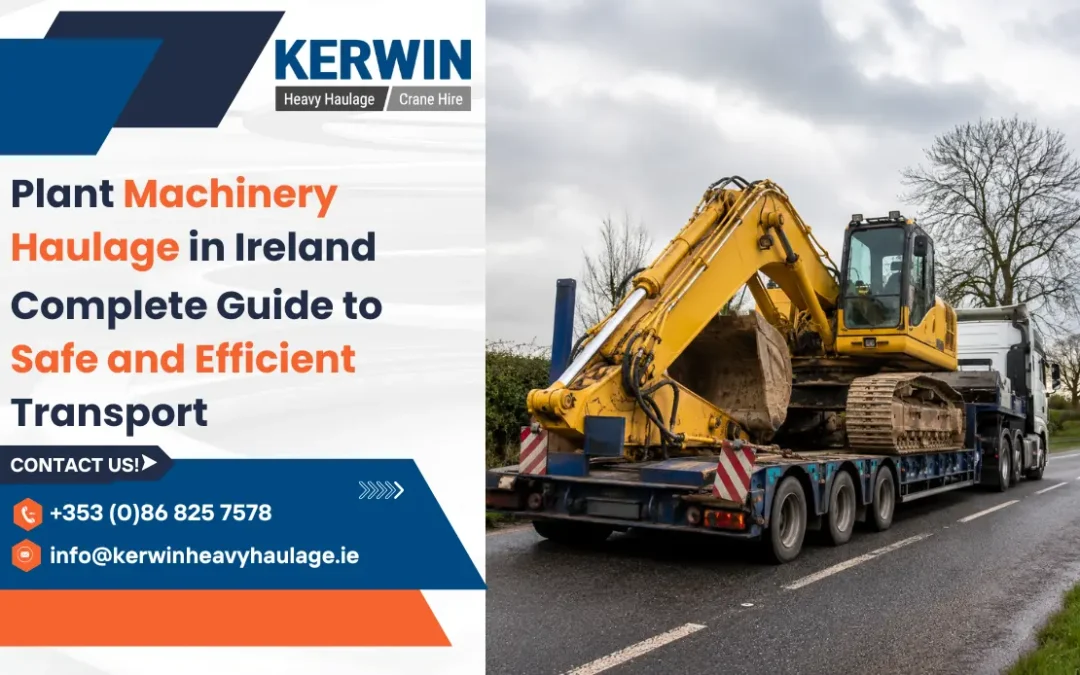
Plant machinery haulage refers to the transportation of heavy plant equipment from one location to another using specialist transport vehicles. Because many machines exceed normal road transport dimensions or weights, specialist machinery haulage services are required to ensure safe and legal movement.
Plant haulage often involves transporting equipment that cannot legally or practically travel long distances on public roads under its own power. The process includes route planning, loading, securing, transportation, compliance management, and safe unloading at the destination.
How Plant Machinery Haulage Differs from Standard Freight Transport
| Standard Freight Transport | Plant Machinery Haulage |
|---|---|
| Moves palletised goods and general cargo | Moves heavy plant and construction equipment |
| Usually uses curtain-side or box trailers | Uses low loaders and specialist trailers |
| Standard vehicle dimensions | Often involves abnormal loads or oversized loads |
| Minimal route restrictions | Requires detailed route assessments |
| Lower loading complexity | Specialist loading and securing procedures |
| Standard transport planning | Compliance with heavy haulage regulations |
The biggest difference is risk management. A machine weighing several tonnes requires specialist handling, transport planning, and compliance procedures that do not apply to standard freight.
Types of Plant Machinery Commonly Transported in Ireland
Excavators and Mini Excavators
Excavators are among the most frequently transported machines in Ireland. They are commonly used on construction, demolition, drainage, and infrastructure projects and often require low loader transport between sites.
Bulldozers
Bulldozers are heavy machines designed for earthmoving operations. Their weight and track configuration typically require specialist machinery transport solutions and careful load securing procedures.
Dump Trucks and Site Dumpers
Used extensively on construction and quarry sites, dumpers regularly move between projects and often require plant haulage services due to road travel limitations.
Telehandlers
Telehandlers are widely used on commercial construction projects throughout Ireland. Their height and dimensions often require specialist transport planning before movement.
Wheel Loaders
Wheel loaders are common in construction, agricultural, and quarry operations. Their size and operating weight make professional machinery haulage essential.
Rollers and Compaction Equipment
Road construction and infrastructure projects regularly require the transport of rollers and compaction machinery between active worksites.
Cranes and Lifting Equipment
Many cranes exceed standard transport dimensions and may require crane hire logistical planning, escort vehicle services, route planning, and specialist haulage equipment.
Agricultural Machinery
Modern agricultural machinery continues to increase in size, creating greater demand for professional machinery transport throughout rural Ireland.
Quarry and Mining Equipment
Quarry equipment often presents unique transport challenges due to its significant weight and dimensions.
Road Construction Machinery
Road pavers, planers, stabilisers, and other road-building equipment frequently require transport between large-scale infrastructure projects.
Why Businesses Need Plant Machinery Haulage Services
Moving Equipment Between Construction Sites
Construction companies often operate multiple projects simultaneously. Machinery transport ensures equipment reaches the correct location when required.
Delivering Machinery to New Projects
New developments frequently require equipment mobilisation before construction can begin, making reliable plant haulage an important project consideration.
Transporting Purchased or Sold Equipment
Machinery dealers, contractors, and private buyers regularly require transportation services following machinery purchases or sales.
Relocating Plant Hire Equipment
Plant hire companies depend on efficient machinery haulage to maximise fleet utilisation and minimise downtime between customer contracts.
Emergency Machinery Transport Requirements
Unexpected breakdowns, project changes, or urgent operational requirements can create a need for rapid machinery transport solutions.
How Plant Machinery Haulage Works
Initial Transport Assessment
The process begins with gathering information about the machinery, collection point, destination, dimensions, weight, and project requirements.
Machinery Measurements and Weight Calculations
Accurate dimensions and weight data are critical. These figures determine trailer selection, route suitability, permit requirements, and escort vehicle needs.
Route Planning and Site Access Evaluation
Transport planners assess road restrictions, bridge capacities, road widths, and site access conditions before movement begins.
Selecting the Right Transport Vehicle
Different machines require different transport solutions. Trailer selection depends on dimensions, weight, ground clearance, and loading requirements.
Loading Procedures
Machinery is carefully loaded using controlled procedures designed to maintain stability and minimise risk throughout transportation.
Securing the Machinery
Specialist restraints, chains, tensioners, and securing equipment are used to ensure the load remains stable throughout the journey.
Transportation and Delivery
During transport, drivers must comply with applicable road regulations, route plans, and safety requirements.
Safe Unloading at Destination
The unloading process requires the same level of planning and control as loading to protect both personnel and equipment.
Transport Equipment Used for Plant Machinery Haulage
Low Loader Trailers
Low loaders are the most commonly used transport solution for heavy plant machinery. Their lower deck height allows larger equipment to travel within legal height restrictions.
Step Frame Trailers
Step frame trailers provide additional loading flexibility and are often used for machinery with challenging dimensions.
Extendable Trailers
Extendable trailers accommodate machinery with extended lengths and unusual transport requirements.
Flatbed Trailers
Flatbeds are suitable for certain types of equipment that remain within standard transport dimensions and weight limits.
Modular Heavy Haulage Trailers
These specialist trailers are used for exceptionally heavy loads and complex transport projects.
Escort Vehicles for Oversized Loads
Escort vehicles play a critical role in managing traffic interactions, improving safety, and supporting abnormal load movements throughout Ireland.
Factors That Determine the Best Transport Method
Machinery Size
Dimensions often determine the trailer type, route selection, and whether additional permissions are required.
Transport Weight
Weight affects axle configurations, trailer choice, bridge assessments, and regulatory compliance obligations.
Ground Clearance Requirements
Machines with low ground clearance require transport solutions that reduce the risk of damage during loading and unloading.
Travel Distance
Long-distance machinery transport may involve additional planning considerations compared with local movements.
Loading and Unloading Conditions
Site conditions significantly influence transport planning and equipment selection.
Road Restrictions and Access Challenges
Narrow roads, bridge restrictions, and urban environments frequently influence machinery haulage decisions.
Plant Machinery Haulage Regulations in Ireland
Ireland has strict regulations governing heavy haulage and machinery transport. Compliance is essential not only for legal reasons but also for public safety.
Vehicle Weight Regulations
Maximum vehicle weights are regulated under Irish road transport legislation. Operators must ensure vehicle and load combinations remain compliant with applicable limits.
Load Dimension Restrictions
Transport operators must assess vehicle width, height, and length against legal road transport limits before movement.
Oversized Load Requirements
Where machinery exceeds standard dimensions, additional transport planning and notifications may be required before movement can proceed.
Transport Compliance Responsibilities
Responsibility extends beyond the driver. Transport operators, logistics planners, site managers, and equipment owners all play a role in ensuring compliance.
Road Safety Requirements
The Road Safety Authority places significant emphasis on load security, vehicle condition, driver competence, and safe transport practices.
Documentation Required for Machinery Transport
Documentation may include vehicle records, route assessments, transport plans, machinery specifications, load security records, and other compliance-related information, depending on the movement involved.
The Importance of Route Planning for Plant Machinery Transport
In professional machinery haulage, route planning is one of the most important stages of the entire operation. A route that appears suitable for standard vehicles may be completely unsuitable for transporting heavy plant machinery. Experienced transport planners assess every section of the proposed journey to identify potential restrictions, hazards, and compliance requirements before movement begins.
Bridge and Weight Restrictions
Many bridges throughout Ireland have weight restrictions that can affect machinery transport operations. Transport planners must verify whether a bridge can safely accommodate the combined weight of the transport vehicle and machinery before travel begins.
Road Width Limitations
Some regional and local roads contain narrow sections that may restrict the movement of oversized machinery. Route assessments help identify suitable alternatives where required.
Urban and Rural Transport Challenges
Urban areas often present challenges such as roundabouts, parked vehicles, overhead services, and restricted access points. Rural roads may involve sharp bends, limited passing opportunities, and older infrastructure.
Construction Site Access Considerations
A transport route does not end when the vehicle reaches the site entrance. Site access roads, ground conditions, turning areas, and unloading locations must also be assessed.
Minimising Transport Delays
Effective route planning reduces the likelihood of unexpected delays, road closures, traffic conflicts, and operational disruptions that could affect project schedules.
Plant Machinery Haulage for Construction Projects
Construction remains one of the largest users of plant haulage services in Ireland. From small residential developments to major infrastructure schemes, machinery transport plays a vital role in project delivery.
Infrastructure Projects
Large infrastructure projects require the movement of excavators, cranes, rollers, pavers, and other heavy plant equipment between multiple work locations.
Commercial Construction Sites
Commercial developments often involve strict project timelines. Reliable machinery transport helps contractors maintain productivity and avoid costly delays.
Residential Developments
Housing developments frequently require equipment to be relocated as construction progresses through different stages of the project.
Utility and Energy Projects
Utility works and renewable energy developments often take place in remote locations, requiring detailed transport planning and specialist indoor and outdoor secure storage logistics or heavy haulage solutions.
Common Challenges in Plant Machinery Haulage
Even with detailed planning, machinery transport projects can present a range of operational challenges.
Restricted Access Locations
Many construction sites have limited access points that make loading and unloading more complex than standard transport operations.
Oversized Machinery Dimensions
Large machines can create challenges relating to road widths, turning radii, overhead structures, and route selection.
Tight Project Deadlines
Construction schedules often leave little room for delays. Effective planning is essential to ensure machinery arrives when required.
Weather Conditions
Ireland’s weather can influence loading operations, road conditions, visibility, and overall transport safety.
Traffic and Road Restrictions
Traffic congestion, roadworks, diversions, and temporary restrictions can all impact machinery haulage schedules.
Multi-Machine Transport Requirements
Large projects often require several machines to be moved simultaneously, requiring careful coordination and logistical planning.
Factors Affecting Plant Machinery Haulage Costs
Every machinery transport project is unique, which means costs can vary considerably depending on operational requirements.
Machinery Size and Weight
Larger and heavier machines typically require specialist trailers, additional planning, and potentially escort vehicle support.
Distance and Route Complexity
Longer transport distances and complex routes generally increase operational costs and planning requirements.
Escort Vehicle Requirements
Where escort vehicles are required, additional resources and personnel become part of the overall transport operation.
Permit Requirements
Some abnormal load movements may involve additional administrative and compliance processes that influence project costs.
Loading and Unloading Equipment
Specialist lifting equipment or site-specific loading requirements can affect transport pricing.
Time-Sensitive Deliveries
Urgent transport requirements may require additional resources to meet project deadlines.
Choosing a Plant Machinery Haulage Provider
Selecting the right machinery haulage provider can significantly influence project efficiency, compliance, and safety.
Industry Experience
Experience within heavy haulage operations helps transport providers anticipate challenges and manage complex movements effectively.
Fleet Capabilities
A suitable transport fleet ensures machinery can be moved using equipment specifically designed for the load requirements.
Safety Standards
Strong safety procedures help protect personnel, machinery, road users, and project timelines.
Insurance Coverage
Appropriate insurance arrangements protect the transport process.
Nationwide Transport Coverage
Businesses operating across Ireland often benefit from providers capable of supporting nationwide machinery transport requirements.
Project Planning Expertise
Comprehensive planning capabilities are often as important as transport equipment when managing complex heavy plant movements.
What Sets Kerwin Heavy Haulage Plant Machinery Transport and Escort Apart?
Extensive Heavy Haulage Knowledge
Years of involvement in machinery haulage and escort operations have provided valuable experience across construction, infrastructure, agricultural, and industrial sectors.
Specialist Transport Equipment
Access to specialist trailers and transport equipment allows safe movement of a wide range of heavy plant machinery.
Escort Vehicle Expertise
Professional escort vehicle support helps improve safety and compliance during oversized and abnormal load transport operations.
Nationwide Project Support
Experience supporting machinery transport projects throughout Ireland enables effective planning for diverse operational requirements.
Focus on Safety and Compliance
Every transport project benefits from a strong understanding of Irish road transport regulations and heavy haulage best practices.
Book Plant Machinery Haulage with Kerwin Heavy Haulage Today
If your project requires professional plant machinery haulage anywhere in Ireland, Kerwin Heavy Haulage can assist with transport planning, machinery transport, heavy plant movements, abnormal load logistics, and escort vehicle support. Our team understands the operational, regulatory, and safety requirements involved in moving valuable machinery efficiently and compliantly throughout Ireland.
Conclusion
Plant machinery haulage involves far more than transporting equipment from one location to another. Every movement requires detailed planning, suitable transport equipment, compliance management, route assessments, and a strong understanding of Irish transport regulations. Whether supporting construction, infrastructure, agriculture, utilities, or industrial projects, professional machinery haulage helps businesses move heavy plant safely, efficiently, and with minimal disruption.
Frequently Asked Questions
What machinery can be transported on a low loader?
Low loaders commonly transport excavators, bulldozers, rollers, telehandlers, wheel loaders, dumpers, agricultural machinery, and various heavy plant equipment.
How is plant machinery secured during transport?
Specialist chains, restraints, tensioning systems, and load securing equipment help ensure machinery remains stable throughout transportation.
When are escort vehicles required?
Escort vehicles may be required when machinery dimensions exceed certain limits or where additional road safety measures are necessary.
How long does machinery transport take?
Transport times depend on distance, route complexity, permits, traffic conditions, loading requirements, and machinery dimensions.
What affects plant machinery haulage costs?
Costs are influenced by machinery size, transport distance, trailer requirements, escort vehicles, permits, and project complexity.
Can oversized machinery be transported nationwide?
Yes. With appropriate planning, compliance management, route assessments, and specialist equipment, oversized machinery can be transported throughout Ireland.
What permits may be required for abnormal loads?
Requirements vary depending on dimensions, weight, route, and applicable transport regulations governing the proposed movement.
How should machinery be prepared before transport?
Machinery should be inspected, cleaned where necessary, secured properly, and prepared according to transport and safety requirements.