
Transporting Aeropods across Ireland is not a routine delivery. These units are large, heavy, high-value structures that require careful planning, specialist equipment, and experienced transport teams. From route planning to lifting, every stage must be controlled to ensure the Aeropod reaches its destination safely, without damage or disruption.
What Makes Aeropod Transportation Challenging in Ireland?
Aeropods are not designed to be moved frequently. Their size and weight, combined with Ireland’s road and site conditions, make transportation a specialist task.
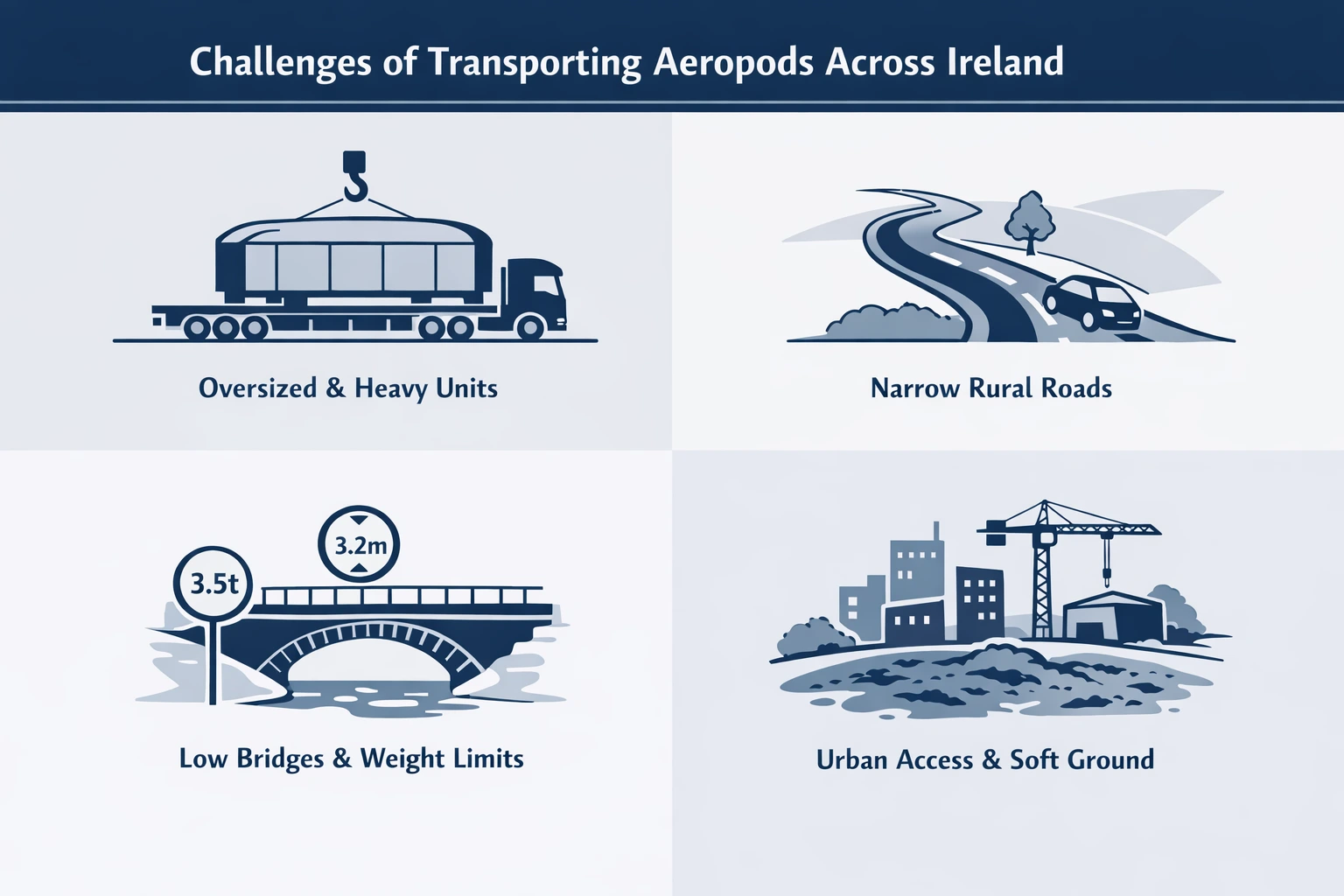
Key challenges include:
- Load that exceeds standard road transport limits
- Structural sensitivity to vibration and uneven lifting
- Narrow rural roads, sharp bends, and roundabouts
- Urban access restrictions and soft ground at sites
Ireland’s infrastructure varies greatly. A route that looks simple on paper may involve low bridges, weight-restricted roads, or tight access points. This is why transporting heavy loads such as Aeropods requires careful planning long before the unit is moved.
Why Heavy Haulage is Used for Aeropod Transport
Heavy haulage is designed specifically for transport heavy and oversized items that standard lorries cannot carry. Aeropods often qualify as an abnormal load due to their dimensions and weight.
Heavy haulage vehicles are:
- Designed to handle extreme size and weight
- Equipped with heavy-duty trailers for stability
- Operated by skilled drivers trained in abnormal load transport
Heavy haulage ensures safe weight distribution across axles, reducing stress on the load and the road network. It also allows transport teams to control speed, cornering, and braking, which is critical when moving large modular units.
In many cases, local authorities must be informed or permits arranged, especially when the load occupies more road space than usual or requires traffic management.
The Role of Crane Hire in Aeropod Transportation
Transport alone is not enough. Aeropods must be lifted safely during loading and unloading, which is where crane hire becomes essential.
Truck-mounted and mobile cranes are used because:
- Aeropods cannot be dragged or pushed into place
- Lifting points must be balanced to avoid structural stress
- Ground conditions and reach requirements vary by site
HIAB cranes are commonly used for controlled lifts where access is limited, while larger mobile cranes are required for heavier units or longer lift distances. These cranes operate with precision and are operated remotely to improve safety.
Correct crane selection ensures the Aeropod is lifted evenly, placed accurately, and secured without shock loading.
Step-by-Step: How Aeropods Are Transported Safely
Transporting heavy machinery or modular units follows a structured process to ensure safe delivery.
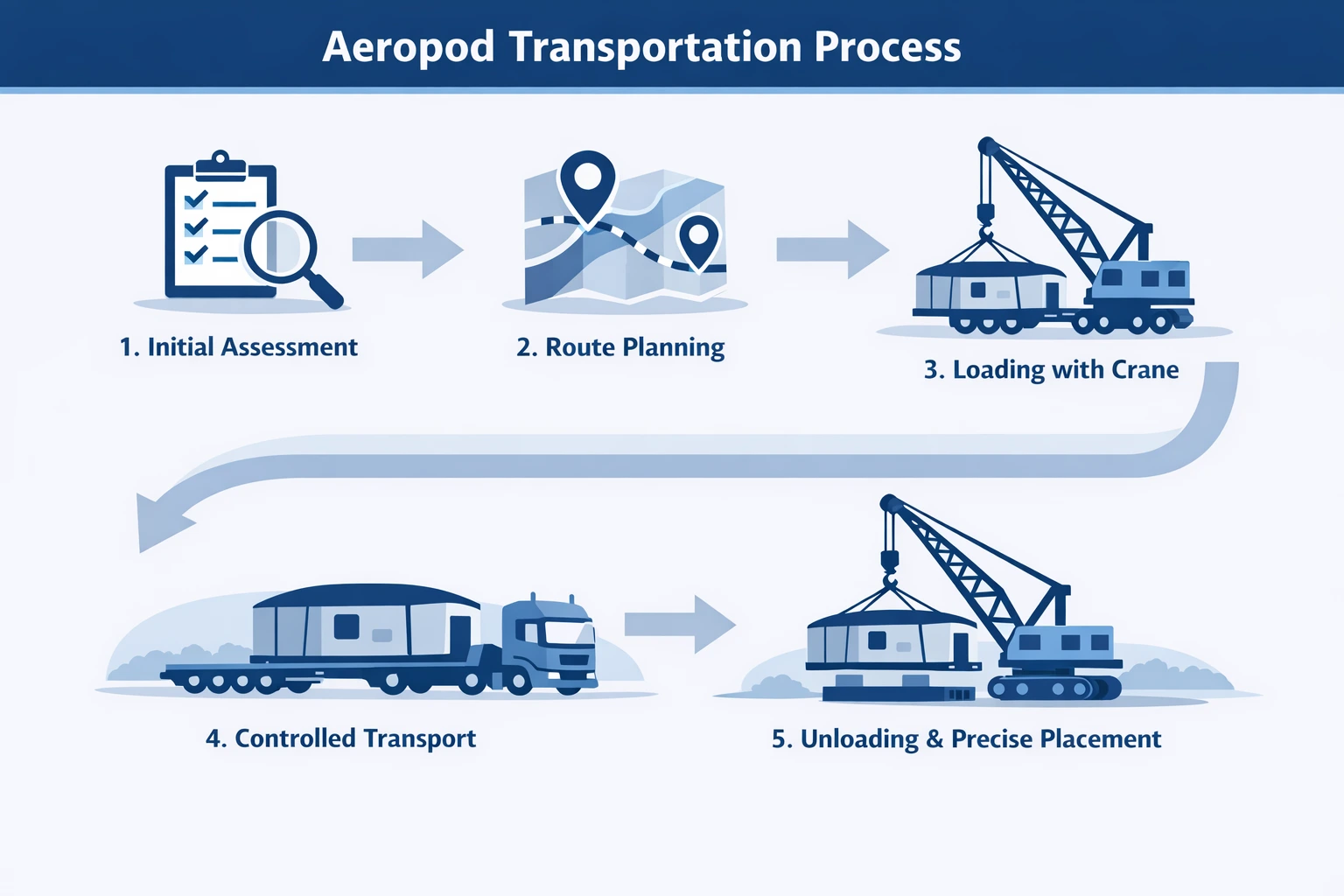
1. Initial Assessment
- Confirm size, weight, and lifting points
- Review collection and delivery site access
- Identify risks linked to ground conditions or overhead obstacles
2. Route Planning
- Survey roads, bridges, and junctions
- Assess whether the load exceeds standard limits
- Coordinate with local authorities if required
3. Loading
- Position the crane and transport vehicle correctly
- Lift Aeropod using approved lifting methods
- Secure load using heavy-duty restraints
4. Transport
- Controlled driving by skilled drivers
- Escort vehicles if required for abnormal load movements
- Continuous monitoring during transit
5. Unloading and Placement
- Crane set-up and ground assessment
- Controlled lifting and precise placement
- Final checks to confirm stability and alignment
This structured approach ensures the Aeropod reaches its destination safely and without unnecessary risk.
Safety Standards and Compliance in Ireland
Safety is not optional in heavy haulage. Transporting heavy loads must comply with Irish road transport and lifting standards.
Key safety considerations include:
- Licensed and trained crane operators
- Certified lifting equipment
- Vehicles rated for the load being carried
- Proper documentation and permits
Compliance protects not only the load, but also road users, site workers, and nearby property. Experienced transport services understand these requirements and plan accordingly.
Common Risks in Aeropod Transport and How They Are Managed
Even with planning, risks exist. Understanding them is key to preventing issues.
Common risks include:
- Load shift during transport
- Ground failure during lifting
- Weather-related delays
- Access restrictions discovered late
These risks are managed through proper surveys, conservative planning, and coordination between haulage and crane teams. Experience plays a major role in anticipating problems before they occur.
Planning Timelines: How Long Aeropod Transport Usually Takes
Many people underestimate how long transporting heavy loads takes. The physical movement may take a day, but planning can take much longer.
Typical timeline elements:
- Initial assessment and surveys
- Route approval and coordination
- Scheduling cranes and transport together
Rushed planning increases risk. Proper timelines allow transport teams to work safely and efficiently.
Cost Factors
While exact pricing varies, costs are influenced by:
- Size and weight of the Aeropod
- Distance and route complexity
- Crane size and lift duration
- Permit and escort requirements
Cheapest options often ignore risk. In heavy haulage, cost must be balanced against safety and reliability.
When Heavy Haulage and Crane Hire Are Not Enough
Some projects require additional preparation. This may include:
- Temporary road modifications
- Ground reinforcement at delivery sites
- Coordination with installation contractors
Transporting heavy machinery or modular units is often part of a larger project, not a standalone task.
How to Choose the Right Partner
When selecting a transport provider for Aeropods, decision-makers should look for:
- Proven experience with abnormal loads
- Integrated transport services and crane capability
- Knowledge of Irish road and site conditions
- Clear communication and planning processes
The goal is not speed, but control and safety.
Get Professional Help: Kerwin Heavy Haulage
If you are planning an Aeropod move and want clarity on transport heavy requirements, lifting needs, and compliance in Ireland, speaking with an experienced heavy haulage and crane specialist at Kerwin Heavy Haulage, we can help you plan the process correctly from the start.
Conclusion
Transporting Aeropods across Ireland is a complex operation that combines heavy haulage, crane hire, and detailed planning. From managing abnormal loads to coordinating lifting and delivery, every step is designed to protect the unit and everyone involved. Understanding this process helps businesses make informed decisions and avoid costly mistakes.
FAQs
Are Aeropods always classed as abnormal loads?
Not always, but most Aeropods exceed standard size or weight limits.
Can transport and crane lifting happen on the same day?
Yes, if planning and site conditions allow.
Do weather conditions affect Aeropod transport?
Yes, wind and ground conditions can delay lifting operations.
Who is responsible for route planning?
This is typically handled by the transport team in coordination with authorities.
Is special equipment always required?
Yes, standard transport vehicles are rarely suitable for Aeropods.