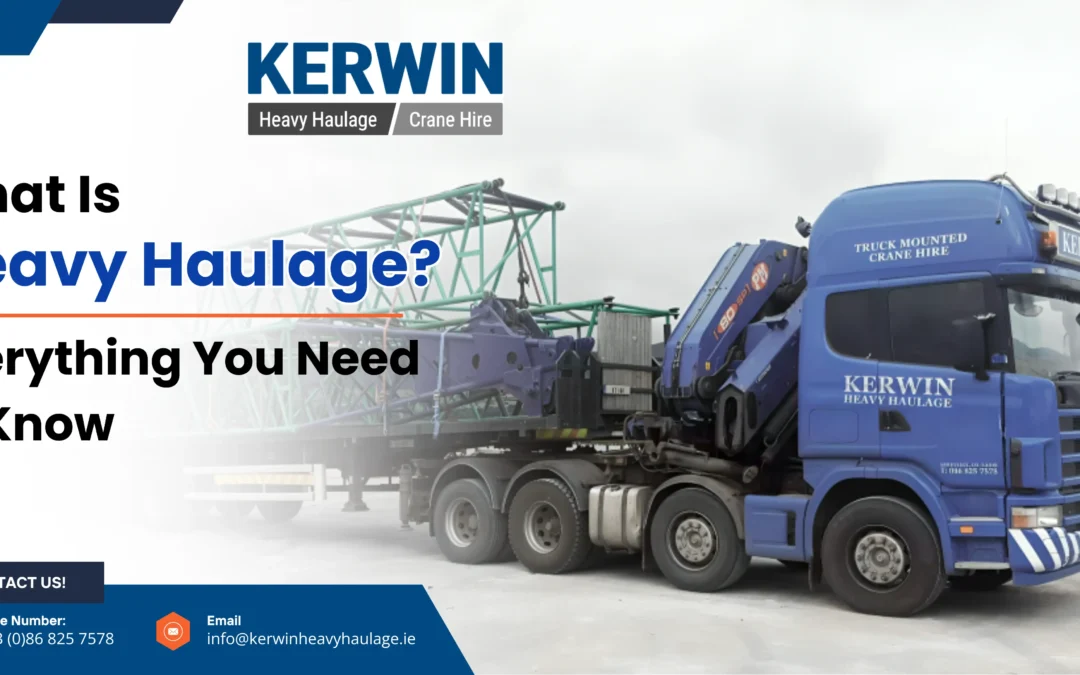
Heavy haulage is the transportation of oversized or overweight loads that cannot be moved by standard trucks due to their size, weight, or both. These loads—like industrial machinery, wind turbines, or large construction equipment—require specialist heavy haulage planning, vehicles, permits, and expertise.
This guide by Kerwin Heavy Haulage, will walk you through the real-world aspects of the heavy haulage industry, including how it’s done, why it’s needed, and what equipment is used.
We’re drawing from years of experience handling abnormal and heavy loads across Ireland, the UK, and mainland Europe, so you’ll get the facts without the fluff.
Why Heavy Haulage Exists?
Standard trucks have legal size and weight limits. When a load exceeds those limits, it’s considered an abnormal or oversized load and requires heavy haulage services. This could mean transporting:
- Machinery such as cranes
- Wind turbines
- Oversized structural steel
- Agricultural or mining equipment
- Heavy goods like transformers or tanks
The goal is always the same: efficiently moving the load from point A to B, safely and legally, using specially designed haulage equipment and staff.
When Does a Load Become “Heavy Haulage”?
Generally, if a load exceeds:
- 2.55m in width
- 4.65m in height
- 18.75m in length
Or 44 tonnes in weight, it’s no longer considered “normal.” These oversized loads fall into the heavy haulage category and demand special permits, planning, and vehicles.
The Challenges in Heavy Haulage
Moving heavy cargo isn’t just about loading it on a truck and driving off. It involves careful planning and real-time coordination. Common challenges include:
- Route restrictions (low bridges, sharp bends, weak roads)
- Weight limits on roads or bridges
- Timing restrictions (only certain hours allowed)
- Escort or pilot vehicle coordination
- Weather and visibility conditions
Handling these challenges is what makes hauling companies in this field specialists.
Equipment Used in Wide Load Haulage
Let’s talk gear. Transporting heavy loads takes more than muscle—it needs the right tools.
- Extendable and modular trailers: Customizable to fit irregular or long loads.
- Low loaders: Designed to keep the cargo lower to the ground for height clearance.
- Hydraulic platforms and lifters: For loading/unloading without damaging the equipment.
- Self-propelled modular transporters (SPMTs): For large and sensitive items that need precision.
- Escort vehicles: Equipped with communication gear to guide traffic and ensure safe passage.
Every piece of kit is chosen based on the type of load, route conditions, and delivery destination.
Planning and Safety
Before any load hits the road, a route survey is carried out. This involves:
- Inspecting roads and identifying obstacles (trees, tight corners, etc.)
- Checking bridge capacity
- Confirming clearance heights for tunnels and overpasses
- Ensuring suitable entry/exit points at both ends
Planning and safety are central pillars of heavy haul success. One missed detail could result in delays or damage.
Legal Requirements and Permits
There’s a lot of paperwork involved in heavy haulage, and for good reason. These loads pose a greater risk to road infrastructure and public safety.
Depending on the country or local authority, permits may require:
- Declaring exact weight and dimensions
- Escort vehicle coordination
- Pre-approved travel routes
- Movement only at certain times (e.g., at night or early morning)
Each country in Europe has its own rules, but compliance is non-negotiable. That’s why wide load haulage companies handle permit applications early during the planning stage.
Load Securing and On-Road Safety
Securing the load is mission-critical. It’s not just about safety—it’s a legal requirement.
- Chains, straps, and binders are used depending on the material and shape.
- Anti-slip mats or protective covers may be added.
- Loads are checked at multiple points during the journey.
Operators are trained in load-securing techniques and emergency handling. Regular safety inspections and communication between drivers, pilot cars, and logistics teams help ensure every journey goes as planned.
The Impact on Infrastructure
One of the reasons heavy haulage is so highly regulated is because heavy haulage vehicles can cause stress on roads and bridges.
That’s why route planning takes infrastructure strength into account. In some cases, authorities may even close roads temporarily or strengthen parts of the route beforehand.
Heavy Haulage and the Supply Chain
In today’s world, supply chains are more complex than ever. Heavy haulage transport plays a crucial role, especially for sectors like:
- Construction
- Renewable energy (wind turbines, solar farms)
- Industrial manufacturing
- Oil and gas
- Mining and extraction
Without heavy haulage, many large-scale projects would grind to a halt. From moving pieces of machinery across borders to delivering structural steel to remote sites, the sector keeps the supply chain flowing.
How Technology Is Changing Heavy Haulage
Today, real-time tracking and GPS fleet management allow for better monitoring and transparency. Load movement can be tracked every step of the way.
Advanced sensors, automation, and even semi-autonomous vehicles are making their way into haul trucking fleets, ensuring better safety and efficiency.
Even planning is getting smarter—some companies now use route simulation software to test different path scenarios before the wheels move.
Need to Move Something Big?
At Kerwin Heavy Haulage, we specialise in Abnormal/Heavy Haulage loads throughout Ireland, the UK, and Mainland Europe. Whether you’re transporting industrial machinery, wind turbine parts, or other oversized loads, our team can handle the complexity—from permits and planning to delivery and compliance.
Final Takeaway
Heavy haulage isn’t just about big trucks and bigger loads—it’s a specialised field that sits at the heart of infrastructure and industry.
From construction and energy to manufacturing and logistics, heavy haulage services make it possible to deliver what’s too large or too heavy for everyday transport.
If you’re dealing with heavy goods or need help moving oversized equipment, understanding the basics of heavy haul transport is a great place to start
Now that you know what it takes—planning, permits, equipment, and safety—you’re better prepared to take the next step.