

Container haulage is the transport of shipping containers from ports, warehouses, or depots to their intended destinations. It is a vital part of the supply chain for businesses dealing with large volumes of goods.
Understanding container haulage helps companies plan efficiently, transport a wide range of items, and navigate both standard and abnormal load requirements.
What is Container Haulage?
Container haulage is the movement of large containers using specialised trucks, trailers, or transport equipment designed to handle the size and weight of loaded containers. In Ireland, this process is crucial due to the high volume of imports and exports handled by the country’s ports, particularly Dublin Port, Cork, and Rosslare.
Containers are typically built in standard sizes (20ft and 40ft), which makes them a popular choice for transporting goods, machinery, boats and cars, or other large items. Businesses rely on container haulage to ship large quantities cost-effectively over both short and long distances.
Key aspects of container haulage include:
- Supply Chain Efficiency: Containers allow businesses to transport large volumes in a single trip, reducing handling time.
- Standard Sizes: 20ft and 40ft containers fit most trucks and storage facilities, making logistics predictable and organised.
- Load Security: Containers keep goods protected from weather and damage during transit.
- Versatility: Open side, flat rack, or specialised containers can accommodate a wide range of items, from machinery to modular buildings.
So, container haulage in Ireland forms the backbone of the country’s freight transport system, ensuring large items move safely from ports to distribution points, storage facilities, or directly to clients.
Types of Container Haulage
Container haulage in Ireland involves several transport methods depending on the cargo type, size, and distance. Each type has specific advantages and applications:
1. Road Haulage
- The most common type in Ireland.
- Uses articulated trucks and trailers to move containers between ports, warehouses, and customers.
- Offers flexibility to reach locations that rail or other modes cannot.
- Suitable for standard-size containers, loaded and unloaded, over long distances.
2. Rail Haulage
- Efficient for transporting large volumes over long distances.
- Reduces road congestion and is environmentally friendly.
- Often used in combination with road haulage for the first and last mile delivery.
3. Intermodal or Multimodal Transport
- Combines road, rail, and sometimes sea transport.
- Popular choice for international trade or long-distance shipments.
- Ensures large items move seamlessly across different transport networks.
4. Specialised Container Haulage
- Includes flat rack, open side, and refrigerated containers.
- Flat rack containers transport oversized machinery or vehicles that cannot fit inside standard containers.
- Open side containers are used for bulky goods that require side access.
- Enables haulage companies to transport a wide range of cargo safely.
By understanding the types of container haulage, businesses can select the right method for their cargo, balancing cost effectiveness, speed, and safety.

Container Haulage vs. Abnormal Load in Ireland
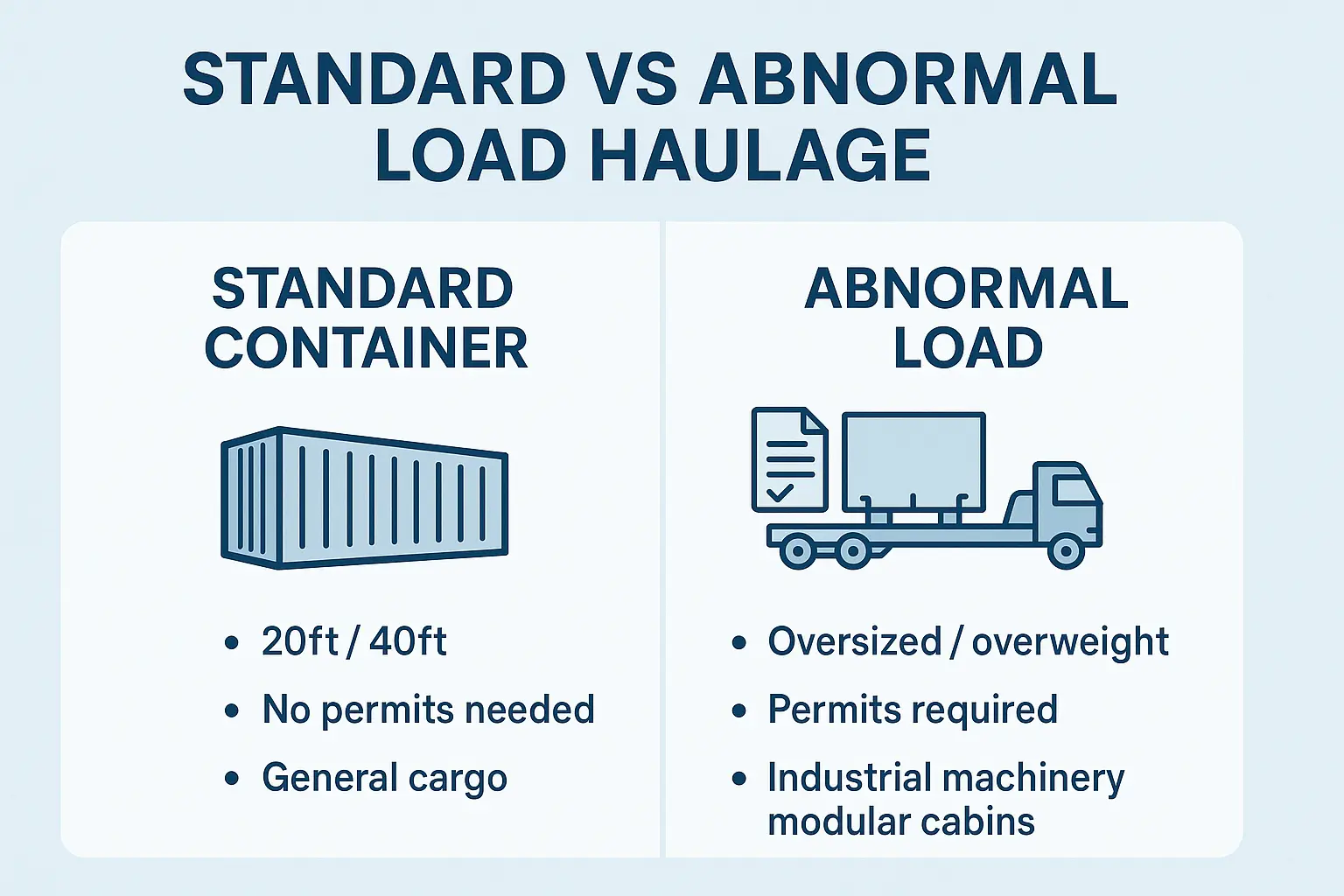
Not all containers fall under standard container haulage. Some shipments require abnormal load transport due to their size or weight:
1. Standard Container Haulage
- Typically includes 20ft or 40ft containers.
- Standard containers carry general goods, construction materials, or vehicles.
- Can be loaded and unloaded using conventional cranes and trailers.
- Does not require special permits in Ireland.
2. Abnormal Load Haulage
- Used when containers exceed legal limits for height, width, or weight (over 44 tonnes gross weight for Ireland).
- Includes oversized machinery, high cube containers, or modular units.
- Requires special permits, route planning, and Garda notification.
- Often involves escort vehicles for safety and compliance.
Type |
Falls Under |
Permit Needed? |
Example |
| Standard 20ft/40ft Container | Container Haulage / Heavy Haulage | No | Construction materials, general cargo |
| Oversized / Overweight Container | Abnormal Load Haulage | Yes | Industrial machinery, modular cabins |
Understanding the distinction ensures businesses comply with regulations and plan appropriately for the transport of large items.
The Container Haulage Process in Ireland
Transporting containers involves several detailed steps to ensure the safety and efficiency of the supply chain. Here’s a breakdown for someone with no prior knowledge:
1. Booking and Scheduling
- Planning the movement of containers according to availability and delivery deadlines.
- Includes selecting the correct type of haulage and route.
2. Collection from Port or Depot
- Containers are picked up from ports like Dublin, Cork, or Rosslare.
- Standard and abnormal load containers are handled differently due to size and weight.
3. Transport to Destination
- Road haulage is most common for short to medium distances.
- Rail is used for heavy or bulk shipments over long distances.
- Intermodal transport may combine both for efficiency.
4. Unloading and Delivery
- Containers are unloaded using cranes or forklifts.
- Careful handling ensures goods remain undamaged.
5. Documentation and Compliance
- Ensures all permits, insurance, and legal obligations are met.
- Critical for abnormal loads or international shipments.
Each step requires careful planning, coordination, and communication between hauliers, clients, and port authorities to maintain a smooth supply chain.
Challenges in Container Haulage
Businesses must be aware of the challenges involved in container haulage to avoid delays, additional costs, or regulatory issues:
1. Regulatory Challenges
- Irish transport rules for heavy and abnormal loads must be followed.
- Permits for oversized containers can take time to process.
2. Operational Challenges
- Port congestion or limited crane availability can cause delays.
- Scheduling issues may disrupt supply chain timelines.
3. Cost Challenges
- Fuel, tolls, and equipment fees can add up, especially for long distances or abnormal loads.
4. Risk Management
- Damage, theft, or misplacement of goods is a concern.
- Abnormal loads carry additional risk due to size and handling requirements.
5. Environmental Considerations
- Compliance with emission regulations and sustainable practices is increasingly important.
By understanding these challenges, businesses can plan better, reduce risks, and maintain cost effectiveness.
Factors Businesses Should Consider
When planning container haulage, companies need to consider:
- Haulage Type: Standard or abnormal, road, rail, or multimodal.
- Container Size and Weight: Ensure legal compliance.
- Scheduling and Lead Time: Plan for collection, transport, and delivery.
- Cost Optimisation: Compare haulage service options to achieve cost-effective solutions.
- Cargo Requirements: Flat rack, open side, or refrigerated containers may be needed.
- Supply Chain Integration: Ensure smooth transition from port to final destination.
- Transport Distance: Long distances may require multimodal solutions.
- Regulatory Compliance: Permits, Garda notification, and safety standards.
Proper planning helps businesses transport a wide range of goods efficiently, from standard shipments to oversized items.
Container Haulage Service in Ireland: Kerwin Heavy Haulage
If your business requires reliable container haulage services across Ireland, Kerwin Heavy Haulage provides expertise in moving standard containers and abnormal loads.
With years of experience, we understand the challenges of transporting large items, boats, cars, and heavy machinery over long distances while complying with all Irish regulations.
Kerwin Heavy Haulage offers:
- A wide range of haulage services for businesses of all sizes.
- Cost-effective solutions for large volumes and standard sizes.
- Safe and secure transport, loaded and unloaded efficiently.
- Support for complex supply chain requirements across Ireland.
Conclusion
Container haulage is a specialised and essential part of the logistics and transport sector.
Understanding the types of haulage, the difference between standard containers and abnormal loads, and the step-by-step process is vital for businesses transporting large volumes over long distances.
By planning effectively, considering size, weight, and regulatory requirements, companies can maintain an efficient, cost-effective supply chain.