
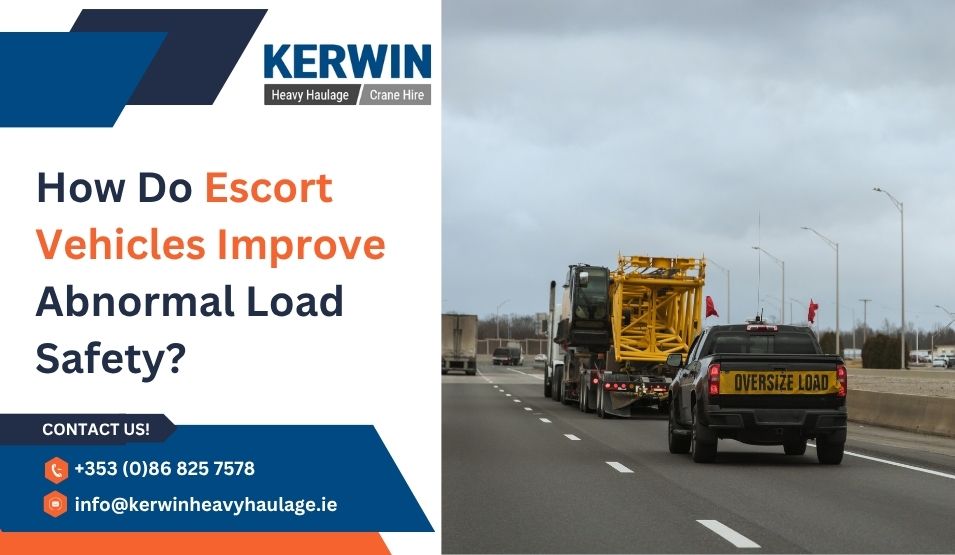
Transporting an abnormal load on public roads creates challenges that do not arise during a standard haulage journey. A load may be unusually wide, long, high or heavy, making junctions, narrow roads, bridges, urban areas and changing traffic conditions more difficult to negotiate.
So, how do escort vehicles improve abnormal load safety?
Abnormal load escort vehicles provide an additional layer of visibility, communication, hazard awareness and traffic coordination during the journey. Positioned ahead of, behind or alongside the transport operation where appropriate, they help the haulage team identify developing hazards, communicate road conditions and support the controlled movement of the load.
An escort vehicle is not a replacement for route planning, permits, suitable equipment, secure load restraint or competent drivers. Instead, it forms part of a wider safety plan designed around the particular load and route.
What Is an Escort Vehicle for an Abnormal Load?
An escort vehicle, sometimes called a pilot car, is a vehicle used to accompany an abnormal load movement and provide additional support during the journey.
The escort vehicle is separate from the heavy haulage vehicle carrying the load. Its role is to improve awareness and coordination around the convoy rather than to carry the load itself.
Depending on the operation, an escort vehicle may travel ahead of the load to observe traffic and road conditions, or another escort may operate behind it. Vehicle positioning depends on the characteristics of the movement, the route, the traffic environment and the requirements applying to the particular journey.
For businesses arranging escort vehicles for abnormal loads, the key benefit is the additional layer of communication and observation they provide while the load is actually moving.
How Do Escort Vehicles Improve Abnormal Load Safety?
The safety value of an escort vehicle comes from what it can observe, communicate and help coordinate while the abnormal load is on the road.
1. Warning Other Road Users
An abnormal load can take up considerably more road space than an ordinary commercial vehicle. Other drivers may not immediately appreciate its dimensions or understand why the convoy needs additional room to manoeuvre.
An escort vehicle provides advance visibility of the movement. Appropriate warning lights, safety signs and vehicle positioning can help make other road users aware that an abnormal load is approaching.
This is particularly useful on roads where visibility is restricted or where the load may need to occupy more than one lane while negotiating a section of the route.
The objective is not simply to announce that a large vehicle is coming. It is to allow the transport team to manage the developing traffic situation and reduce unnecessary conflict between the load and other road users.
2. Improving Driver Awareness
The heavy haulage driver has a demanding job. They must manage the vehicle, trailer, load dimensions, braking, steering, road position and surrounding traffic at the same time.
An escort driver provides another set of eyes on the road.
A pilot car travelling ahead can report approaching traffic, roadworks, parked vehicles, obstructions, congestion or other hazards to the haulage driver. This information gives the driver more time to respond appropriately.
For example, a narrow section may look clear from the truck driver’s position but contain an approaching vehicle that is difficult to see because of a bend or restricted visibility. Early communication allows the transport team to prepare before the load reaches the obstruction.
That additional awareness is a practical part of abnormal load safety, particularly where road conditions change during a journey.
3. Supporting Traffic Control
Large loads can affect normal traffic flow, particularly at junctions, roundabouts and restricted sections of road. An escort vehicle can support the agreed traffic management arrangements for the movement by providing warning, monitoring approaching traffic and communicating changing conditions to the haulage driver.
Effective escort vehicle traffic control is about helping the transport team manage the road environment around the load. Depending on the operation, an escort driver may position the vehicle to improve visibility, communicate traffic conditions or support the controlled passage of the load through a difficult section.
Temporary traffic control arrangements must reflect the specific operation and applicable requirements. An escort driver should not be assumed to have unlimited authority to stop or control traffic.
For escort vehicles Ireland operations, the precise arrangements depend on the load, route, traffic conditions and requirements applying to the journey. The aim is to improve coordination between the transport team and other road users while keeping the abnormal load movement controlled and predictable.
4. Helping With Difficult Manoeuvres
Some of the greatest risks arise when an abnormal load has to turn, change lanes or pass through a restricted section.
A wide load may need additional road space. A long load can require a significantly larger turning radius. A high load may need careful positioning beneath structures or around restricted routes.
At a tight junction or roundabout, the escort driver can communicate observations to the haulage driver and help the transport team understand what is happening around the vehicle.
Good communication is essential. Drivers need clear information about traffic, available space and changing conditions so that manoeuvres can be carried out in a controlled manner.
The objective is not to make the load move faster. It is to make difficult movements more predictable and controlled.
5. Identifying Hazards Before They Become Problems
Effective abnormal load route planning should identify known hazards before an abnormal load journey begins. These can include low bridges, overhead cables, narrow roads, restricted junctions and other physical limitations that may affect the movement.
However, the road environment can change after planning has been completed. Roadworks may appear, traffic may build up, vehicles may be parked where they were not expected, or an incident may create an unexpected obstruction.
An escort vehicle positioned ahead of the load can provide an additional layer of live observation. The escort driver can identify developing conditions and communicate them to the haulage team before the load reaches the hazard.
Known restrictions should already have been assessed through route planning and, where appropriate, a route survey. Escorting does not replace this preparation. Instead, it helps the transport team respond to conditions that could not reasonably be anticipated before departure.
This combination of abnormal load route planning, route assessment and live escort support is an important part of maintaining abnormal load safety throughout the journey.
How Do Escort Vehicles Communicate With the Haulage Driver?
Communication is one of the most important parts of an effective abnormal load escort.
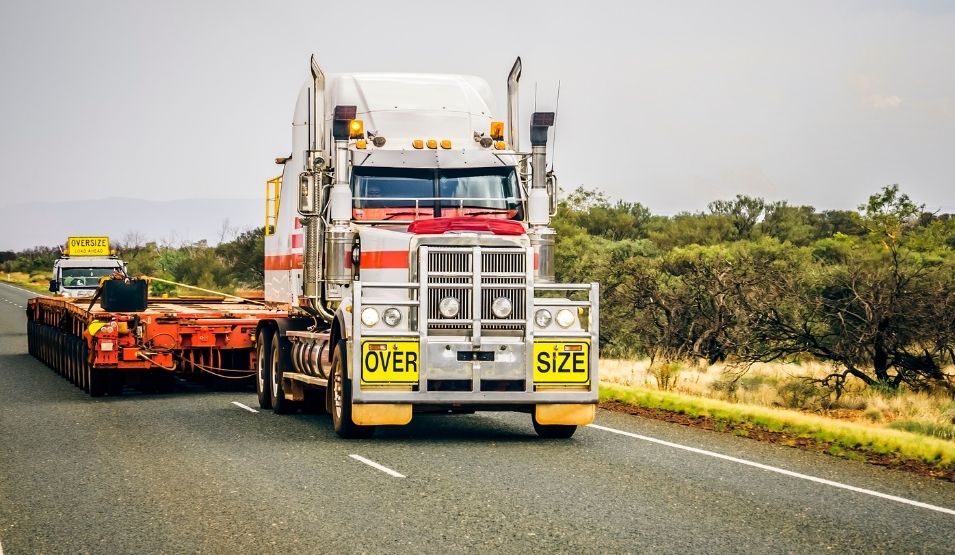
Kerwin Heavy Haulage’s escort vehicles are equipped with licensed two-way radios, warning equipment and safety gear. These systems allow communication between the escort and haulage teams during the movement.
Radio communication can be used to report:
- Approaching traffic
- Road obstructions
- Narrow sections
- Junction conditions
- Traffic build-up
- Manoeuvring requirements
- Unexpected hazards
- Changes affecting the planned movement
- Emergencies
Clear driver-to-driver communication helps reduce uncertainty. Instead of relying solely on what the heavy haulage driver can see from the cab, the transport team can share observations from different positions around the convoy.
For escort vehicles for abnormal loads, communication is therefore not an optional extra. It is a fundamental part of coordinating the movement safely.
Why Is an Escort Vehicle Particularly Important for Wide, Long or High Loads?
Different abnormal loads create different safety challenges.
Wide Loads
A wide load can reduce available lane space and increase interaction with oncoming traffic. Narrow roads, parked vehicles and roadside obstacles can make the available clearance even more restrictive.
An escort vehicle can provide additional warning and observation while the transport team negotiates these conditions.
Long Loads
Long loads can require a greater turning radius and can affect how the rear of the vehicle moves through junctions and roundabouts.
The front of the transport vehicle may have cleared an obstacle while the rear of the load is still negotiating the same area. Coordinated observation and communication can help the team manage these movements.
High Loads
High loads introduce clearance considerations. Bridges, overhead cables and other structures need to be considered during route planning.
An escort vehicle cannot make an unsuitable route safe by itself. Clearance checks and route planning must come first. During the journey, however, the escort team can provide additional awareness of the road environment and communicate relevant conditions.
Heavy Loads
Heavy loads can affect braking, acceleration, manoeuvrability and infrastructure considerations. Appropriate equipment, load securing, route assessment and operating conditions remain essential.
The escort vehicle supports the movement, but it does not remove the technical risks associated with transporting a heavy load.
Escort Vehicles and Route Surveys: How Do They Work Together?
Route surveys and escort vehicles perform different but complementary functions.
A route survey looks at the planned journey before transport begins. It can identify issues involving road width, bridge clearance, junctions, overhead cables, restrictions and other physical features.
The escort team then works from that planned route while also monitoring actual road conditions during the journey.
For example, a survey may identify a difficult roundabout that requires careful positioning. During the actual movement, the escort driver can observe traffic approaching the roundabout and communicate with the haulage driver as conditions develop.
The survey provides preparation. Escorting provides live observation and coordination.
When Are Escort Vehicles Required for Abnormal Loads?
There is no single rule that means every abnormal load automatically requires an escort vehicle.
Escort requirements can depend on the load dimensions, vehicle configuration, route, permit conditions, traffic environment and operational risks.
In Ireland, the Road Traffic (Specialised Vehicle Permits) Regulations allow the relevant permit conditions to require an attendant or escort vehicle. The requirement therefore needs to be considered in the context of the particular authorised movement rather than assumed from the word “abnormal” alone.
Businesses planning a movement should establish the applicable permit and operational requirements before transport begins.
What Does an Abnormal Load Escort Driver Do?
An escort driver has responsibilities that extend beyond simply following a truck.
Depending on the operation, the role can include:
- Leading or accompanying the load
- Communicating with the haulage driver
- Monitoring road conditions
- Warning other road users
- Identifying hazards
- Supporting difficult manoeuvres
- Assisting with traffic management arrangements
- Responding to unexpected conditions
The exact responsibilities depend on the journey and the arrangements in place.
Why Professional Escort Experience Matters
Driving an escort vehicle during an abnormal load movement requires more than ordinary road awareness.
The escort driver needs to understand how an oversized or heavy load behaves on the road and how its dimensions affect other traffic. They also need to recognise hazards, communicate clearly and understand the requirements of convoy coordination.
Experience is particularly valuable on narrow roads, in urban environments and at complicated junctions where road conditions can change quickly.
Kerwin Heavy Haulage has more than 15 years of experience providing escort vehicle services and operates across Ireland. Its escort operation supports route planning, traffic control, communications and coordination as part of wider heavy haulage movements.
Kerwin’s escort vehicles are equipped with custom light bars, licensed two-way radios and safety equipment including fire extinguishers, first aid kits and safety signs.
The result is an escort service designed around communication, observation and controlled movement rather than simply placing another vehicle on the road.
How Escort Vehicles Fit Into Safe Abnormal Load Transport
An escort vehicle is one component of a wider transport operation.
A typical movement may involve:
- Load assessment
- Route planning
- Route survey
- Permit requirements
- Vehicle and trailer selection
- Load securing
- Escort arrangements
- Traffic management
- Transport
- Delivery and unloading
Each stage contributes to the overall outcome.
The escort team cannot compensate for an unsuitable trailer, inadequate load securing or an unsuitable route. Equally, good route planning does not eliminate the need to monitor changing traffic and road conditions during the journey.
Safe abnormal load transport Ireland operations therefore depend on coordination between planning, equipment, drivers, escort personnel, traffic management and compliance requirements.
Need an Escort Vehicle for Your Abnormal Load?
If you are planning a wide load, long load, high load, heavy machinery movement or another abnormal load journey, it is worth considering the escort requirements as part of the transport planning process.
Kerwin Heavy Haulage provides escort vehicle services throughout Ireland and supports movements involving heavy machinery, industrial equipment, construction equipment, modular buildings and other abnormal loads.
The right arrangements depend on the individual project. Load dimensions, route, permit conditions, traffic requirements and site access can all affect the planning process.
If you are arranging abnormal load transport Ireland, discuss the movement with an experienced heavy haulage team before the journey begins.
Planning an abnormal load movement? Talk to Kerwin Heavy Haulage about escort vehicles, route planning and the wider transport requirements for your journey.
Conclusion
Escort vehicles improve the safety of abnormal loads by adding another layer of visibility, communication, and coordination to complex road movements.
They can warn other road users, help the haulage driver identify developing hazards, support traffic management and assist with difficult manoeuvres. Their value is particularly clear when wide, long, high or heavy loads travel through restricted roads, busy junctions or challenging traffic environments.
However, an escort vehicle is only one part of a safe transport operation. Effective route planning, route surveys, appropriate permits, suitable vehicles, secure load restraint, competent drivers and appropriate traffic management all have a role to play.
For businesses arranging escort vehicles for abnormal loads, choosing an experienced provider can help ensure that the escort operation is properly integrated into the wider transport plan.
With experienced personnel, suitable equipment and clear communication, an abnormal load escort can make a complex movement more controlled and predictable for the transport team and other road users.
Frequently Asked Questions About Abnormal Load Escort Vehicle
How does an escort vehicle improve abnormal load safety?
It provides additional observation, warning and communication during the journey. An escort driver can identify developing hazards, communicate with the haulage driver and support controlled movement through difficult sections.
What does an abnormal load escort vehicle do?
An abnormal load escort vehicle can warn road users, monitor traffic and road conditions, communicate with the haulage driver and support manoeuvres and traffic management arrangements.
Are escort vehicles required for all abnormal loads?
No. Requirements depend on the individual movement, including factors such as load dimensions, vehicle configuration, route and permit conditions.
What is a pilot car?
A pilot car is another term commonly used for an escort vehicle accompanying an abnormal load.
How do escort vehicles communicate with truck drivers?
Escort and haulage drivers can communicate using two-way radios. Kerwin’s escort vehicles are equipped with licensed two-way radios for communication during transport operations.
Can escort vehicles control traffic?
Escort vehicles can support traffic management arrangements where required, but they should not be assumed to have unlimited authority to stop or control traffic. The arrangements depend on the specific operation and applicable requirements.
Why are escort vehicles used for wide loads?
Wide loads can reduce available road space and create additional interaction with oncoming traffic, roadside obstacles and narrow sections. Escort vehicles provide additional warning, observation and communication.
Do abnormal loads need escort vehicles in Ireland?
Not automatically. Escort requirements can arise from the particular transport operation and the conditions attached to the relevant permit.
Can one escort vehicle be enough?
That depends on the individual movement. The appropriate number of escort vehicles can depend on load dimensions, route characteristics, traffic conditions and operational requirements.
Do escort vehicles work with route surveys?
Yes. Route surveys identify known hazards before the journey, while escort drivers provide live observation and communication during the actual movement.