For businesses moving heavy machinery between Ireland, the United Kingdom and mainland Europe, cross-border haulage involves far more than arranging transport from one location to another.
Every movement must comply with transport legislation, road authority requirements, permit conditions and safety regulations in each country the load travels through.
At Kerwin Heavy Haulage, we have spent years supporting complex heavy haulage and escort vehicle operations across international routes. This guide explains how cross-border heavy machinery transport works and why careful planning is essential before any oversized load begins its journey.
What is Considered Heavy Machinery?
Heavy machinery includes large equipment that cannot normally be transported using conventional freight vehicles. Examples include excavators, bulldozers, piling rigs, crushers, road construction machinery, agricultural harvesters, forestry equipment, mobile cranes, industrial presses, generators and other oversized plant machinery used across construction, manufacturing and infrastructure sectors.
What is Cross Border Haulage and Why Specialist Heavy Haulage Is Essential?
Cross-border heavy haulage is the specialist movement of heavy equipment between Ireland, the United Kingdom and mainland Europe using approved transport equipment, professional drivers, route planning, escort vehicles and legally authorised transport permits where required.
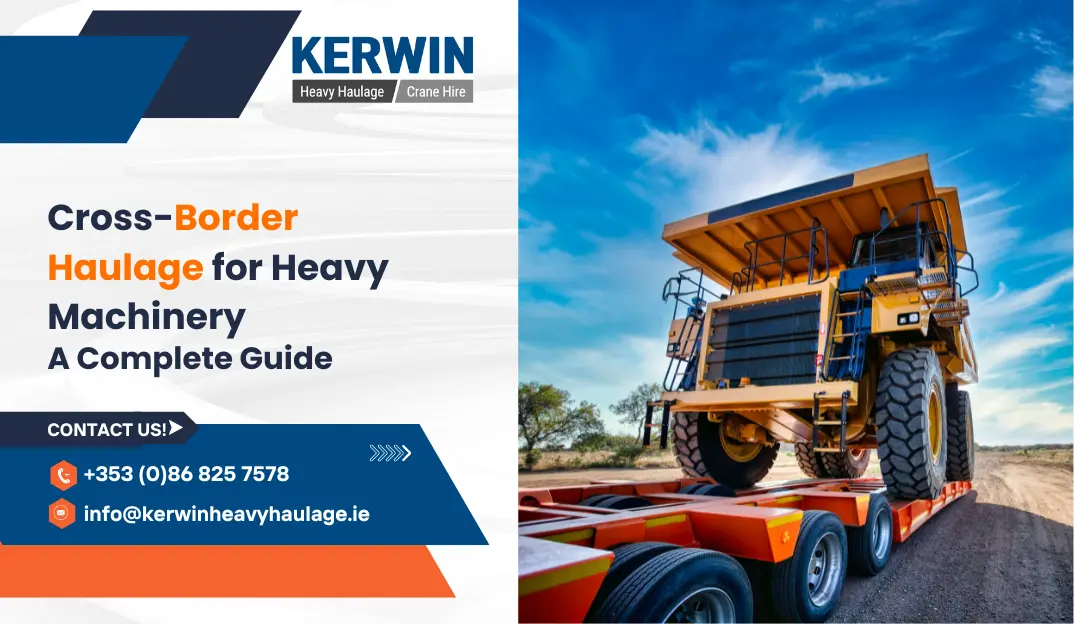
Large machinery presents unique transport challenges because of its dimensions, weight distribution and operational value. Specialist haulage companies use low loader transport, experienced operators and detailed project logistics planning to ensure machinery complies with legal transport requirements while protecting both public roads and the equipment itself.
When is Cross-Border Heavy Machinery Transport Required?
Construction and Civil Engineering Projects
Construction equipment transport is required when excavators, dozers, piling rigs, concrete equipment and other plant machinery must move between major infrastructure developments across Ireland, the United Kingdom and Europe.
Agricultural and Forestry Equipment
Agricultural machinery transport allows tractors, combines, forestry harvesters and specialist farming equipment to move safely between dealerships, contractors, seasonal work sites and international customers.
Industrial and Manufacturing Machinery
Industrial machinery transport supports factory relocations, production line installations and machinery relocation projects where valuable equipment must be delivered safely without affecting operational performance.
Energy and Infrastructure Projects
Renewable energy developments, utility upgrades and infrastructure projects frequently require specialist haulage for transformers, generators, turbines, steel structures and oversized engineering components.
Plant Hire and Equipment Relocation
Plant hire businesses regularly transport heavy equipment across borders to meet customer demand, relocate machinery between depots and support large construction contracts operating internationally.
Heavy Machinery Transport Throughout Ireland
Heavy machinery transport within Ireland supports projects across the construction industry, renewable energy developments, agriculture, manufacturing and public infrastructure. Plant machinery often needs to move between equipment suppliers, construction sites, ports, storage facilities and customer premises. Because many machines exceed standard vehicle dimensions or weights, specialist haulage solutions are frequently required.
Heavy Haulage Between Ireland and the United Kingdom
The movement of heavy equipment between Ireland and the United Kingdom is one of the most common forms of international heavy haulage for Irish businesses. Construction equipment transport, industrial machinery transport and agricultural machinery transport frequently involve ferry crossings before continuing by road to the final destination.
Heavy Machinery Transport Across Mainland Europe
International project logistics frequently involve transporting heavy equipment from Ireland to destinations throughout mainland Europe. Machinery may be required for infrastructure projects, industrial installations, manufacturing facilities, renewable energy developments or specialist engineering contracts.
How to Plan Cross-Border Heavy Machinery Move
Assessing Machinery Dimensions and Weight
The first stage of planning involves obtaining accurate information about the machinery. Overall height, width, length, operating weight, axle loading and centre of gravity all influence how the machinery can be transported.
Choosing the Most Suitable Transport Equipment
Different types of heavy equipment require different transport solutions. Construction machinery, agricultural equipment and industrial machinery all have unique loading characteristics, weight distributions and transport requirements. Selecting the correct trailer also protects valuable machinery by providing appropriate load support and secure restraint throughout transport.
Route Planning for Oversized Loads
Route planning is one of the most important aspects of specialist haulage. Oversized loads cannot always follow the shortest route because road layouts, bridge capacities, junctions, overhead structures and temporary roadworks may affect vehicle access.
Scheduling Safe and Efficient Delivery
Transport schedules must be coordinated carefully with customers, loading teams, ferry operators, delivery sites and, where applicable, escort vehicles. Machinery often forms part of larger construction or infrastructure projects where delayed delivery can affect multiple contractors and project timelines.
Permits and Legal Requirements for Cross-Border Heavy Haulage
Abnormal Load Permits
Where machinery exceeds the standard legal dimensions or weight limits applicable to the route, abnormal loads permissions may be required before transport takes place. These permissions help ensure the movement is assessed appropriately and that suitable operating conditions are established where necessary.
Escort Vehicle Requirements
Some heavy haulage movements require professionally managed escort vehicles to improve safety, assist traffic management and support compliance with the conditions attached to authorised transport operations. Requirements vary according to the characteristics of the load and the jurisdictions through which it travels.
Road Restrictions and Route Approvals
Certain roads, bridges, tunnels and urban areas may not be suitable for transporting exceptionally large or heavy equipment. Route assessments help identify suitable alternatives and reduce the likelihood of disruption during transport.
Country-Specific Transport Regulations
International heavy haulage requires careful consideration of the transport rules that apply within each country on the planned route. Operators should ensure that vehicle configurations, documentation and operational arrangements meet the relevant requirements before the journey begins, helping to support safe and compliant cross-border transport.
Customs and Documentation for International Heavy Machinery Transport
Customs Clearance Requirements
Customs clearance allows machinery to move through international borders in accordance with the applicable import and export procedures. Depending on the route and destination, customs authorities may require declarations, supporting documentation and evidence relating to the transported equipment. Providing complete and accurate information before transport begins helps reduce delays and allows machinery to continue its journey without avoidable interruptions.
Import and Export Documentation
Heavy machinery movements often require commercial and transport documentation that identifies the equipment, its ownership, destination and intended use. The documentation required will depend on the countries involved and whether the machinery is being sold, hired, relocated or temporarily imported for a project. Accurate paperwork supports smooth customs processing and helps prevent unnecessary administrative issues during transport.
Transport Documents and Compliance
Every international heavy haulage movement should be supported by the appropriate transport documents. These records assist drivers, transport operators, authorities and customers throughout the journey while demonstrating compliance with applicable transport requirements. Well-prepared documentation also improves communication between everyone involved in the movement, particularly where machinery passes through several countries before reaching its destination.
Moving Machinery Between Ireland, the United Kingdom, and Europe
Cross-border transport between Ireland, the United Kingdom and mainland Europe requires careful coordination because documentation and border procedures can differ depending on the route selected. Successful machinery relocation depends upon combining detailed route planning, suitable transport equipment, organised scheduling and complete documentation to minimise delays while maintaining operational efficiency.
Cross Border Heavy Haulage Process with Kerwin Heavy Haulage
Initial Consultation and Site Assessment
The process begins by understanding the machinery being transported together with the collection point, delivery location and project requirements. Information relating to dimensions, weight, site access and delivery times forms the basis of the transport plan and allows appropriate specialist haulage solutions to be identified.
Route Planning and Permit Management
Following the initial assessment, detailed route planning considers road suitability, access limitations, ferry crossings and other operational factors that may influence the journey. Where required, transport permissions and related arrangements are coordinated before movement begins to support an efficient transport programme.
Loading Heavy Machinery Safely
Loading is carried out using equipment appropriate for the machinery involved. Depending on operational requirements, this may include crane hire or purpose-built loading equipment. Machinery is secured using suitable restraint methods designed to minimise movement during transport while protecting valuable equipment throughout the journey.
Escorting the Load Across Borders
Where escort vehicles form part of the transport operation, they assist in supporting the safe movement of oversized or abnormal loads throughout the planned route. Effective communication between transport crews contributes to efficient operations, particularly during complex cross border movements involving multiple jurisdictions.
Delivery, Unloading, and Final Positioning
On arrival, machinery is unloaded using methods appropriate to the equipment and site conditions. Where required, crane hire services assist with positioning large machinery safely within the customer’s operational area before the transport project is completed.
Common Challenges in Cross Border Heavy Machinery Haulage, We Help Resolve
Cross border heavy haulage involves numerous operational challenges that require proactive planning. Addressing these factors early contributes to more efficient transport operations and reduces the likelihood of unexpected delays.
Border Delays
International border crossings can affect transport schedules where documentation or inspection procedures require additional time. Early preparation helps minimise disruption.
Permit Approval Timelines
Some transport movements require approvals before travel can commence. Allowing adequate planning time supports better project scheduling and reduces avoidable delays.
Restricted Roads and Bridges
Road layouts, bridge capacities and local access restrictions can influence the routes available for oversized load transport. Thorough route planning helps identify practical alternatives before transport begins.
Weather and Seasonal Conditions
Adverse weather conditions may affect ferry operations, visibility and road conditions, particularly during long-distance transport across several countries. Flexible scheduling assists in managing these operational challenges.
Protecting High-Value Machinery During Transport
Heavy equipment represents a significant investment. Appropriate loading methods, secure restraint systems, suitable transport equipment and experienced handling procedures all contribute to protecting machinery throughout the journey.
The Importance of Escort Vehicles in Cross-Border Heavy Haulage
When Escort Vehicles Are Required
Depending on the characteristics of the load and the applicable transport requirements, escort vehicles may form part of the overall transport operation to assist with managing oversized movements.
Improving Road Safety
Escort vehicles help improve awareness among other road users while supporting the safe movement of heavy equipment through complex sections of the transport route.
Supporting Regulatory Compliance
Where escort arrangements form part of an approved transport operation, they contribute to meeting the operational conditions established for the movement.
Coordinating Safe Movement Across Multiple Countries
International heavy haulage often involves several transport stages across different jurisdictions. Escort teams assist with maintaining communication and coordination throughout the journey.
Factors That Affect Cross-Border Heavy Machinery Transport Costs
The overall cost of international heavy haulage depends on the complexity of the project rather than distance alone.
Machinery Size and Weight
Larger and heavier machinery generally requires more specialised transport equipment and additional planning.
Transport Distance
Longer journeys involve increased operating time, ferry crossings, fuel consumption and project coordination.
Permit and Escort Requirements
Projects requiring abnormal load permissions or escort vehicles typically involve additional planning and operational costs.
Route Complexity
Routes involving restricted access, remote locations or multiple international crossings generally require more detailed planning.
Crane Hire and Additional Services
Where loading, unloading, machinery positioning or indoor and outdoor secure storage are required, these services form part of the overall project logistics programme.
Why Businesses Choose Kerwin Heavy Haulage for Cross-Border Heavy Machinery Transport
Businesses involved in construction equipment transport, industrial machinery transport and infrastructure projects require a transport partner capable of managing complex international movements efficiently.
Experience in Cross-Border Transport
Extensive experience in cross-border heavy haulage enables projects to be planned with careful consideration of operational requirements across Ireland, the United Kingdom and Europe.
Specialist Fleet and Equipment
A modern fleet, including low loader trailers and specialist heavy haulage equipment, allows different types of plant machinery and industrial equipment to be transported safely.
Permit and Escort Expertise
Coordinating transport planning alongside escort vehicles and operational approvals helps support efficient project delivery.
Safety Standards and Compliance
Professional heavy haulage operations place safety, careful planning and compliance at the centre of every transport project.
End-to-End Project Management
Managing transport from the initial assessment through route planning, loading, transportation and final delivery provides businesses with a coordinated approach to machinery relocation.
Ready to Discuss Your Cross-Border Heavy Haulage Project?
Whether you need construction equipment transport, industrial machinery transport, agricultural machinery transport or oversized load transport between Ireland, the United Kingdom and mainland Europe, Kerwin Heavy Haulage provides specialist haulage solutions supported by experienced route planning, escort vehicles, crane hire and secure storage facilities.
Contact our team to discuss your cross-border haulage requirements and receive guidance tailored to your project.
- Call: +353 (0)86 825 7578
- Email: info@kerwinheavyhaulage.ie
- Office: Boley, Abbeyleix, Co. Laois
FAQs About Cross Border Haulage for Heavy Machinery
What qualifies as a cross border heavy haulage load?
A heavy haulage load is machinery or equipment transported between countries that requires specialist transport because of its size or weight.
Do I need permits to transport heavy machinery internationally?
Some movements require permits depending on the machinery, vehicle dimensions, route and the jurisdictions involved.
Are escort vehicles always required?
Escort vehicle requirements depend on the characteristics of the load and the applicable transport requirements.
Can heavy machinery be transported between Ireland, the UK, and Europe?
Specialist haulage operators regularly transport machinery between Ireland, the United Kingdom and mainland Europe.
How long does cross-border heavy machinery transport take?
Transit times depend on distance, route, documentation, ferry schedules and operational requirements.
How is heavy machinery protected during transport?
Appropriate loading, secure restraint systems, suitable trailers and careful handling help protect machinery throughout transport.
Can crane hire be arranged for loading and unloading?
Crane hire can be incorporated where machinery requires lifting during collection or delivery.
What information is required before requesting a quotation?
Typically, machinery dimensions, weight, collection location, delivery destination and preferred transport dates are required to prepare an accurate quotation.