

Understanding the time it takes to complete a heavy haulage job is crucial for businesses, project managers, and logistics planners in Ireland.
The duration of such operations depends on many factors, including the size of the load, route complexity, legal requirements, and weather conditions.
For abnormal and wide-load transports, a job can take anywhere from a few hours to several days.
This guide explains the process in detail, helping readers with little prior knowledge understand what affects heavy haulage timelines.
Factors That Influence the Duration of Heavy Haulage Jobs
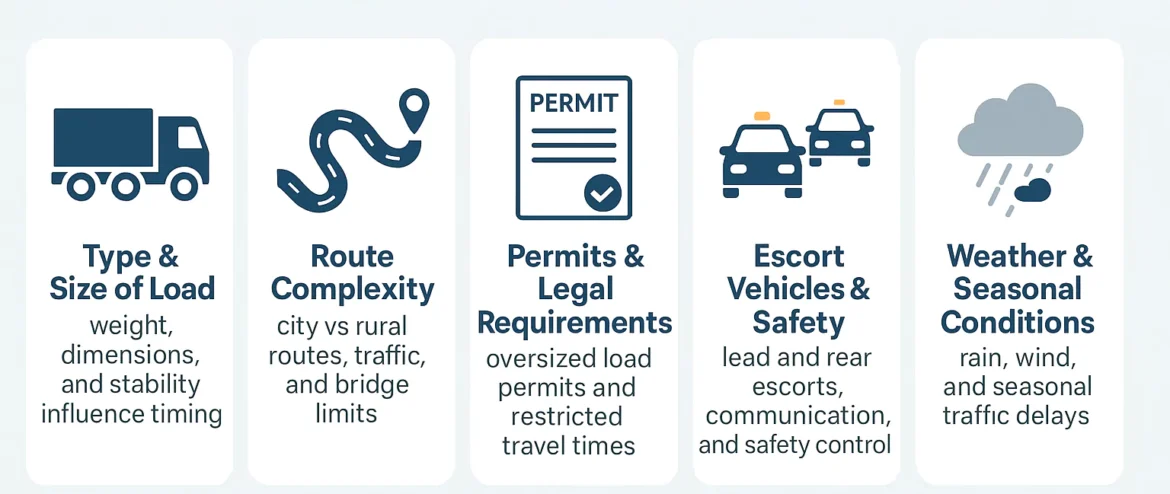
Several factors can affect the duration of a heavy haulage job. These include the type of load, the complexity of the route, legal regulations, safety measures, and weather conditions. Understanding these elements is essential to planning accurately and avoiding delays.
1. Type and Size of Load
The size, weight, and shape of the cargo are among the most significant determinants of transport time. Heavy machinery, industrial equipment, modular buildings, and wind turbine components all have different handling requirements.
- Weight: Heavier loads move more slowly and may require specialised vehicles or additional axles to distribute weight.
- Dimensions: Wide or tall loads may need temporary road closures or adjustments in route planning to avoid low bridges or narrow lanes.
- Load Stability: Cargo that requires careful securing or custom cradling will increase loading and unloading times.
Larger or unusually shaped loads often travel at reduced speeds to maintain safety, directly affecting total job duration.
2. Route Complexity
The chosen route can significantly impact how long a job takes. In Ireland, roads vary from wide national highways to narrow rural lanes, which affects transport speed and planning.
- Urban vs Rural Routes: City streets with traffic lights, pedestrian zones, and narrow roads require slower movement and careful navigation.
- Bridge and Tunnel Restrictions: Certain bridges or tunnels have weight or height limits that force detours.
- Traffic Patterns: Peak traffic hours, construction work, and local events can delay heavy haulage movements.
- Route Surveys: Conducting a pre-journey survey is often necessary to identify potential obstacles and ensure the load fits safely along the entire route.
Complex routes may increase the duration by several hours or even a full day, especially for wide or abnormal loads.
3. Permits and Legal Requirements
In Ireland, moving abnormal or heavy loads legally requires specific permits from local authorities. The type of permit depends on load size, weight, and route.
- Oversize and Overweight Permits: Required when cargo exceeds standard legal dimensions or weight limits.
- Time-Specific Travel: Some permits restrict travel to certain hours to minimise traffic disruption.
- Escort Vehicles: Many permits mandate pilot or escort vehicles for wide loads, which adds coordination time.
Obtaining permits can take a few days to a week, depending on local authority schedules and complexity. Planning this phase carefully ensures the haulage job does not face legal delays.
4. Escort Vehicles and Safety Measures
Escort vehicles play a critical role in the safe transport of wide or heavy loads. Their presence can influence overall journey time.
- Lead and Rear Escorts: Vehicles guide traffic and alert other drivers to oversized cargo.
- Communication: Escorts communicate with the driver and each other to maintain safe speeds and manage obstacles.
- Temporary Road Adjustments: Some jobs may require the temporary removal of street furniture or traffic signs, which must be planned and coordinated.
These safety measures are essential, but can extend the duration of a haulage job significantly.
5. Weather and Seasonal Considerations
Weather conditions in Ireland can be unpredictable, and adverse conditions may slow heavy haulage operations.
- Rain and Wind: Heavy rainfall and strong winds reduce visibility and affect vehicle stability.
- Ice and Frost: Winter conditions may require additional precautions or delays.
- Seasonal Traffic: Summer holidays and festivals increase traffic density, making planning essential.
Monitoring weather forecasts is a standard part of the pre-planning phase, helping to mitigate delays caused by unpredictable conditions.
Typical Timeline for a Heavy Haulage Job

Heavy haulage jobs follow a structured timeline divided into planning, loading, transportation, and unloading phases. Each phase can vary depending on load size, route, and external factors.
1. Pre-Planning Phase
The pre-planning phase is critical to ensuring a smooth operation. It includes:
- Route Surveys: Checking road width, bridge capacity, and potential obstacles.
- Permit Applications: Securing necessary permits for oversize or overweight loads.
- Stakeholder Coordination: Informing local authorities, police, and other relevant parties.
- Vehicle Checks: Ensuring the transport vehicle and trailers are fit for purpose.
Duration: This phase can take 1–7 days, depending on permit processing and route complexity.
2. Loading Phase
Loading heavy or abnormal cargo is a delicate process requiring specialised equipment and trained operators.
- Securing the Load: Straps, chains, and cradles must be positioned to prevent shifting during transport.
- Use of Cranes or Forklifts: Large machinery may require cranes for placement onto trailers.
- Inspection: Verifying that all securing measures comply with safety standards.
Duration: Depending on cargo size, loading can take from a few hours to a full day.
3. Transportation Phase
Once loaded, the cargo is transported along the planned route, observing all legal and safety regulations.
- Speed Limits: Oversized or abnormal loads travel slower than regular traffic.
- Escort Vehicle Coordination: Continuous communication with lead and rear escorts is essential.
- Breaks and Checks: Regular stops ensure vehicle integrity and load security.
Duration: Short routes (under 50 km) may take 2–5 hours, while long-distance moves can take 1–3 days or more.
4. Unloading Phase
The final phase involves safely removing the cargo at its destination.
- Equipment Setup: Cranes or forklifts may be required.
- Inspection: Ensuring the load has arrived safely without damage.
- Final Placement: Positioning the load correctly at the delivery site.
Duration: This can take a few hours to half a day, depending on cargo complexity.
Challenges That Can Extend Heavy Haulage Time
Even with careful planning, several challenges can extend the duration of a heavy haulage job:
- Unexpected road closures or detours.
- Mechanical issues with the transport vehicle.
- Delays in permit approvals.
- Coordination issues with authorities or escort teams.
- Adverse weather conditions.
These challenges emphasise the need for contingency planning in all heavy haulage operations.
Tips for Accurate Time Estimation
For businesses and planners in Ireland, accurate time estimation is essential for project scheduling:
- Plan for Contingencies: Always allow extra time for unexpected delays.
- Consult Experienced Operators: Knowledgeable hauliers provide realistic timelines.
- Use Technology: GPS tracking and route planning software improve scheduling accuracy.
- Understand Legal Restrictions: Complying with permits avoids fines and delays.
- Factor in Weather: Adjust schedules according to seasonal conditions and forecasts.
Get Professional Help for Heavy Haulage Movement
For complex heavy haulage jobs, it is crucial to work with experienced professionals. Kerwin Heavy Haulage provides expert planning and execution of heavy and abnormal load movements across Ireland. Contact our team to discuss your haulage needs and ensure your project runs safely and efficiently.
FAQs
How long does it take to move heavy machinery across Ireland?
Depending on size and route, anywhere from a few hours to multiple days.
Can abnormal loads be transported overnight?
Some movements may be allowed at night, but permits and safety measures often restrict this.
What permits are needed for wide loads?
Oversized or overweight permits issued by local authorities are mandatory.
Does weather significantly affect transport time?
Yes, heavy rain, wind, or icy conditions can slow progress.
Are escort vehicles always required?
For wide or abnormal loads, escort vehicles are typically mandatory for safety compliance.